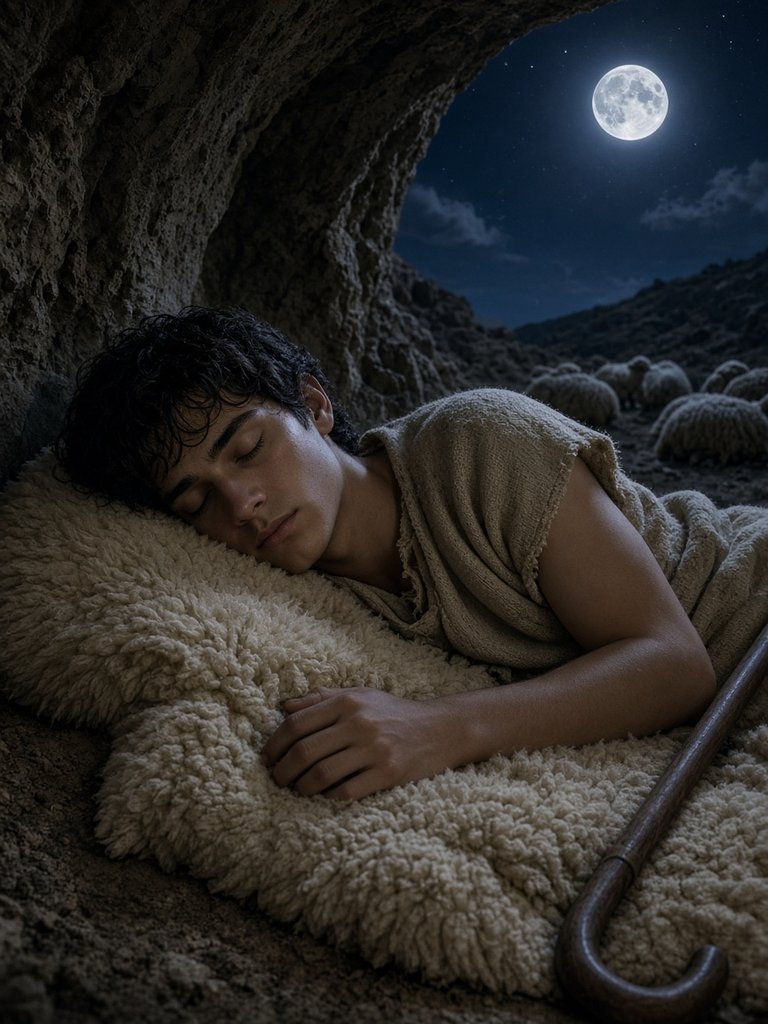
Endymion, a king of Elis or a shepherd of Mount Latmos in Karia, was loved by Selene, the Moon. Apollodorus says that, for his surpassing beauty, the Moon fell in love with him, and Zeus granted him whatever he wished; he chose to sleep for ever, deathless and ageless (Apollodorus 1.7.5, paraphrased).
In Elis he was remembered as a king who made his sons run a footrace at Olympia for the kingdom; the Eleans showed his tomb, while the people of Herakleia near Latmos said he had withdrawn to their mountain (Pausanias 5.1.3–5, paraphrased). Pausanias says Selene bore him fifty daughters (5.1.4).
His sleep became a byword: Plato’s Socrates says that if all things fell asleep and nothing woke, the story of Endymion would mean nothing (Phaedo 72c, paraphrased).
Epithets
- Λάτμιος · Latmios
- of Latmos
Symbols and virtues
Eternal sleep and beauty kept unchanging. Symbols: the moon, the cave on Latmos.
Myths
- Loved by Selene. Apollodorus 1.7.5.
- The everlasting sleep. Apollodorus 1.7.5.
- The race at Olympia. Pausanias 5.1.4.
Cult and places
- Olympia. Tomb shown at the starting point of the stadium (Pausanias 5.1.5, 6.20.9).
- Herakleia under Latmos. Shrine on the mountain (Pausanias 5.1.5).
Sources
Apollodorus 1.7.5–6; Plato, Phaedo 72c; Apollonius of Rhodes 4.57–58; Pausanias 5.1.3–5, 6.20.9.
Quotations in public-domain translations (Evelyn-White 1914, Butler 1898/1900, Taylor 1792); other authors paraphrased.