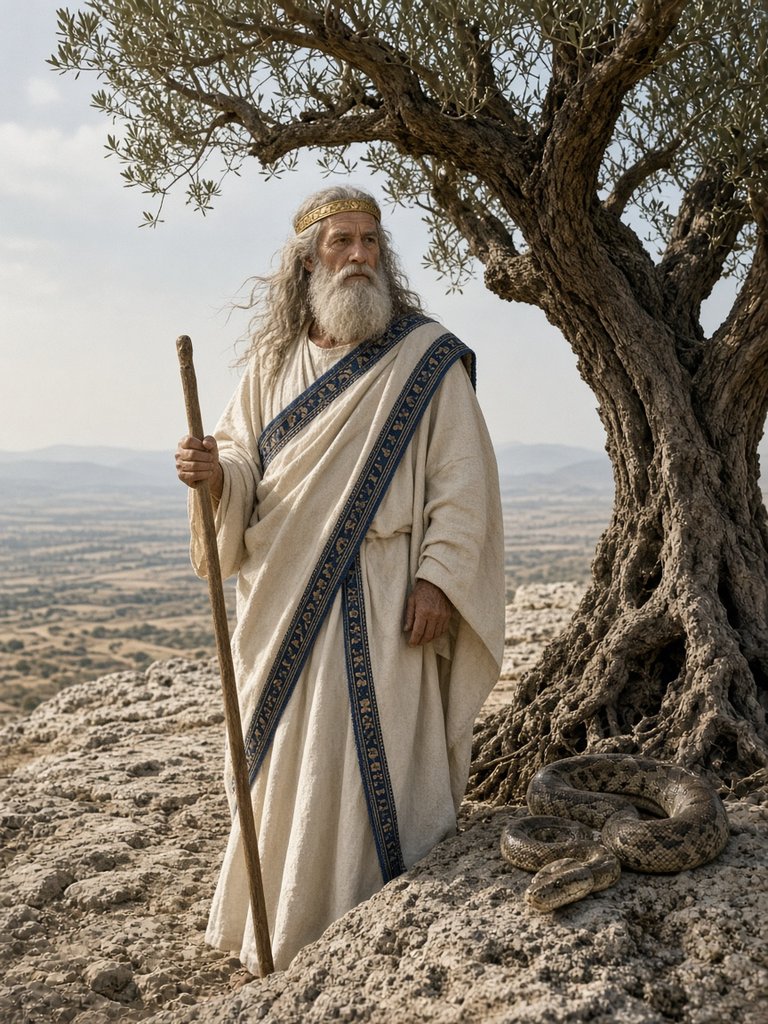
Erechtheus is the earth-born ancestral king of Athens. The Catalogue of Ships calls the Athenians “the people of great Erechtheus, who was born of the soil itself, but Jove’s daughter, Minerva, fostered him, and established him at Athens in her own rich sanctuary. There, year by year, the Athenian youths worship him with sacrifices of bulls and rams” (Iliad 2.546–551, tr. Butler).
In the Odyssey Athena leaves Scheria for Athens, “where she entered the abode of Erechtheus” (Odyssey 7.80–81, tr. Butler). Later writers distinguished an elder Erichthonios, born of the earth and raised by Athena, from a younger Erechtheus his grandson (Apollodorus 3.14.6–3.15.5).
In war with Eleusis and its Thracian ally Eumolpos, son of Poseidon, an oracle demanded the sacrifice of one of his daughters, and Erechtheus gave her up; he killed Eumolpos and was struck down by Poseidon (Euripides, Erechtheus fragments; Apollodorus 3.15.4, paraphrased). His temple on the Akropolis, the Erechtheion, held Athena’s sacred olive and the salt spring of Poseidon (Herodotus 8.55; Pausanias 1.26.5).
Epithets
- μεγαλήτωρ · megalētōr
- great-hearted (Iliad 2.547)
Symbols and virtues
Rootedness in the land, and sacrifice for the city. Symbols: the sacred olive, the snake of the Akropolis.
Myths
- Born of the soil, raised by Athena. Iliad 2.546–551.
- The house of Erechtheus. Odyssey 7.80–81.
- War with Eumolpos. Apollodorus 3.15.4.
Cult and places
- Athens. The Erechtheion with its altar of Poseidon and Erechtheus (Pausanias 1.26.5; Herodotus 8.55).
In the poets
“The people of great Erechtheus, who was born of the soil itself, but Jove’s daughter, Minerva, fostered him.”Homer, Iliad 2.547–548, tr. Samuel Butler (1898), public domain.
Sources
Homer, Iliad 2.546–551; Odyssey 7.80–81; Herodotus 8.44, 8.55; Euripides, Ion, Erechtheus (fragments); Apollodorus 3.14.6–3.15.5; Pausanias 1.26.5–27.4.
Quotations in public-domain translations (Evelyn-White 1914, Butler 1898/1900, Taylor 1792); other authors paraphrased.