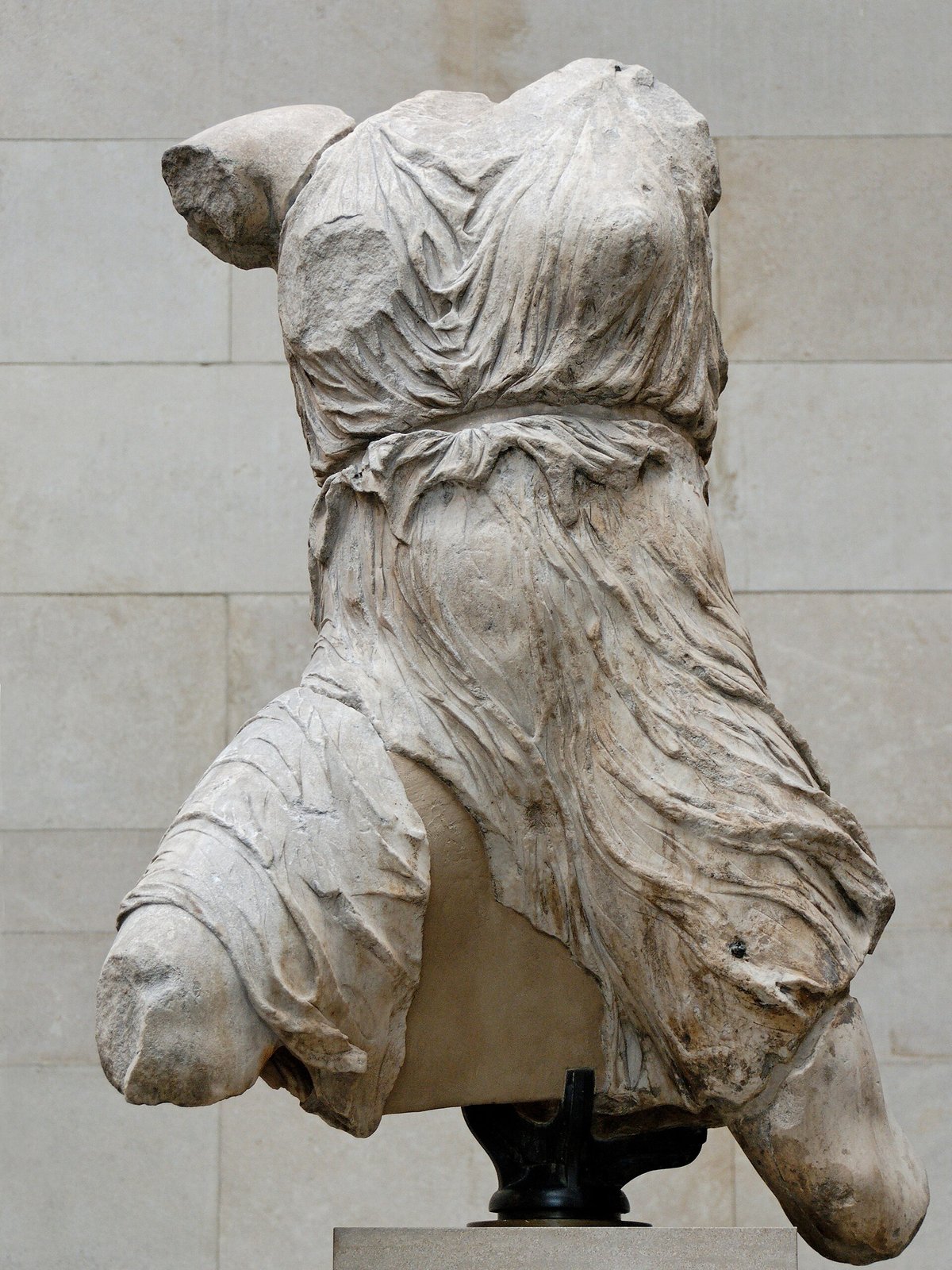
“Thaumas wedded Electra the daughter of deep-flowing Ocean, and she bare him swift Iris and the long-haired Harpies” (Theogony 265–267). Iris is the rainbow and the messenger of the gods in the Iliad, golden-winged and wind-footed. When the gods must swear, Zeus sends her to bring the water of Styx in a golden jug (Theogony 780–787). She brought Eileithyia to Delos for the birth of Apollo (Homeric Hymn to Apollo 102–114).
Epithets
- Χρυσόπτερος · Chrysopteros
- golden-winged (Iliad 8.398)
- Ποδήνεμος · Podenemos
- wind-footed (Iliad 2.786)
Domains and symbols
The rainbow joining heaven and earth; messages; the oath-water. Admire: swiftness, faithful service. Sacred symbols: wings, the herald’s staff, the jug.
Myths
- Messenger. She carries the word of Zeus and Hera throughout the Iliad.
- The oath. She fetches the water of Styx (Theogony 780–787).
- Delos. She brought Eileithyia to Leto (Homeric Hymn to Apollo 102–114).
Cult sites
- Delos. The Delians offered her cakes of wheat, honey and dried figs (Semos, quoted by Athenaeus 14.645b).
Offerings
Honey cakes and figs. Today: pray to her that messages arrive and are understood.
Beneath the Divine Mind
Iris is the Divine Mind as communication: the bridge of light between heaven and earth, personified and deified as the rainbow. Like every god she stands beneath the One (The One and the Many).
Honouring Iris today
- Offerings. Honey cakes.
Hymn
And Thaumas wedded Electra the daughter of deep-flowing Ocean, and she bare him swift Iris and the long-haired Harpies.Hesiod, Theogony 265–267, tr. H. G. Evelyn-White (1914), public domain. There is no Homeric or Orphic hymn to Iris.
Sources
Hesiod, Theogony 265–269, 780–787; Homer, Iliad 2.786, 8.398; Homeric Hymn to Apollo 102–114; Athenaeus 14.645b.
Quotations in public-domain translations (Evelyn-White 1914, Butler 1898/1900, Taylor 1792); other authors paraphrased.