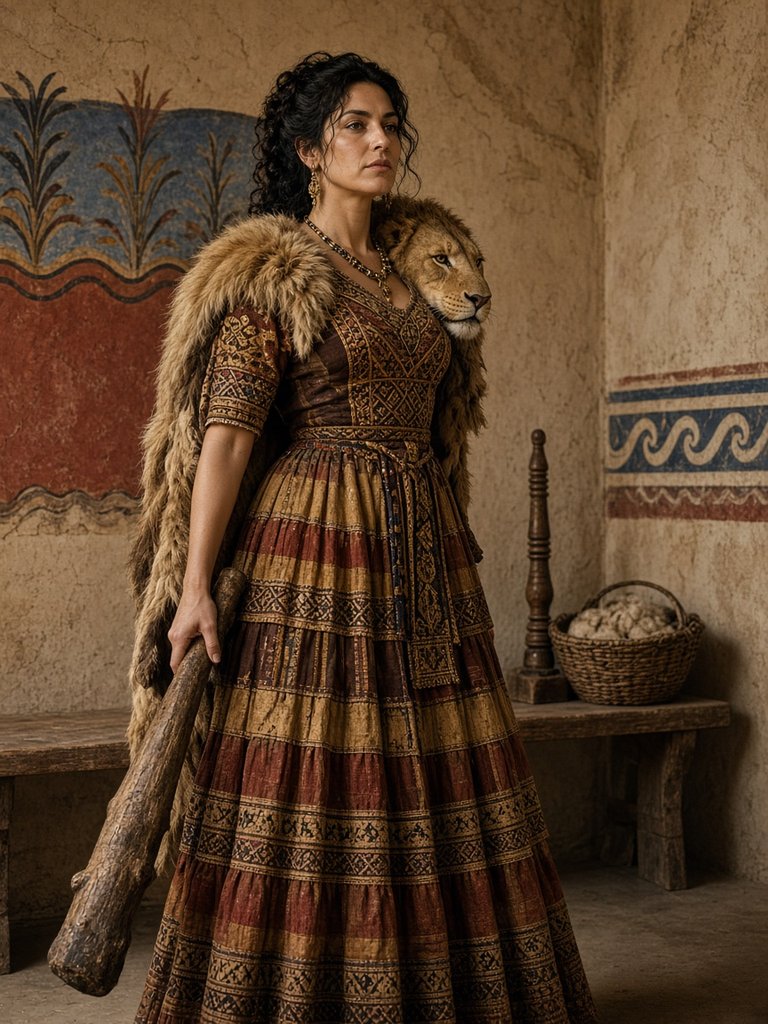
Omphale was a queen of Lydia, daughter of Iardanos. After Herakles killed Iphitos, he fell sick, and the oracle at Delphi declared that he would be cured only if he were sold as a slave for three years and the price paid to the dead man’s family; Hermes sold him to Omphale (Apollodorus 2.6.2–3, paraphrased).
In Sophocles’ Women of Trachis the herald tells Deianeira that her husband spent a year as a bondman to the Lydian woman Omphale (Trachiniae 248–254, paraphrased). During his service Herakles rid Lydia of robbers and monsters, among them the Kerkopes and Syleus (Apollodorus 2.6.3, paraphrased).
Later writers made the servitude a love story: Diodorus says Omphale freed and married him and bore him a son, Lamos (4.31.5–8, paraphrased). Ovid tells how the two exchanged clothes, she wearing the lion skin and carrying the club while he wore her gown and spun wool, and has Deianeira reproach him for it (Fasti 2.305–358; Heroides 9.53–118, paraphrased).
Epithets
- Ἰαρδανίς · Iardanis
- daughter of Iardanos
Symbols and virtues
Power reversed: the hero as servant, the queen with his weapons. Symbols: the lion skin, the club, the spindle.
Myths
- Herakles sold to her. Apollodorus 2.6.2.
- A year in bondage. Sophocles, Trachiniae 248–254.
- Wife of Herakles, mother of Lamos. Diodorus 4.31.5–8.
- The exchange of clothes. Ovid, Fasti 2.305–358.
Sources
Sophocles, Trachiniae 69–70, 248–254; Diodorus 4.31.5–8; Apollodorus 2.6.2–3; Ovid, Fasti 2.305–358, Heroides 9.53–118.
Quotations in public-domain translations (Evelyn-White 1914, Butler 1898/1900, Taylor 1792); other authors paraphrased.