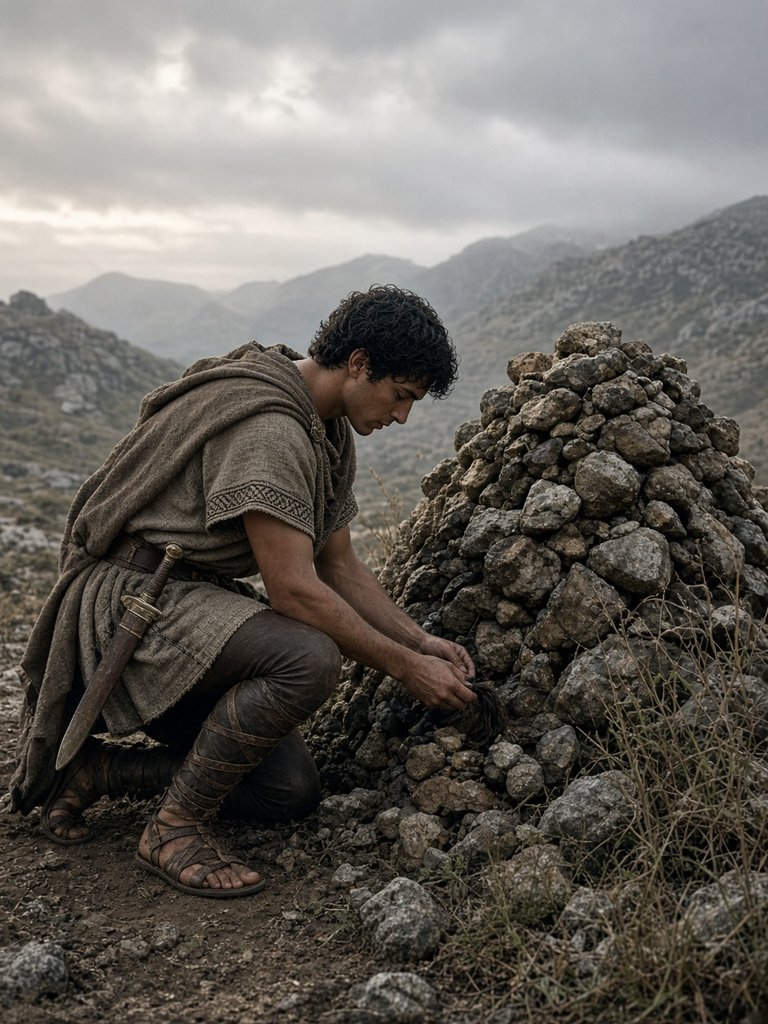
Orestes is the son of Agamemnon and Klytaimnestra. In the Odyssey he is the model of a good son. Zeus opens the poem by recalling Aigisthos, “who had been killed by Agamemnon’s son Orestes” (Odyssey 1.29–30, tr. Butler), and Athena asks Telemachos: “have you not heard how people are singing Orestes’ praises for having killed his father’s murderer Aegisthus?” (Odyssey 1.298–300, tr. Butler).
Homer says only that he came home from Athens in the eighth year and killed Aigisthos, holding a funeral feast for him and for his mother (Odyssey 3.306–310, paraphrased). In Aeschylus he kills his mother at the command of Apollo, is driven mad by the Erinyes, and is tried and acquitted at Athens before the Areopagus with Athena casting the deciding vote (Libation Bearers; Eumenides, paraphrased).
In the sixth century the Spartans, told by Delphi to bring home his bones, found them at Tegea in the yard of a smith and carried them to Sparta (Herodotus 1.67–68, paraphrased).
Epithets
- Ἀγαμεμνονίδης · Agamemnonidēs
- son of Agamemnon
- τηλεκλυτός · tēleklutos
- far-famed (Odyssey 1.30)
Symbols and virtues
Duty and its cost; vengeance judged and ended by law. Symbols: the sword, the suppliant at Apollo’s altar.
Myths
- The avenger. Odyssey 1.29–43, 3.306–310.
- Matricide. Aeschylus, Libation Bearers.
- The trial at Athens. Aeschylus, Eumenides.
- His bones at Tegea. Herodotus 1.67–68.
Cult and places
- Sparta. His bones brought from Tegea (Herodotus 1.67–68).
In the poets
“Have you not heard how people are singing Orestes’ praises for having killed his father’s murderer Aegisthus?”Homer, Odyssey 1.298–300, tr. Samuel Butler (1900), public domain.
Sources
Homer, Odyssey 1.29–43, 1.298–300, 3.193–310; Aeschylus, Oresteia; Herodotus 1.67–68.
Quotations in public-domain translations (Evelyn-White 1914, Butler 1898/1900, Taylor 1792); other authors paraphrased.