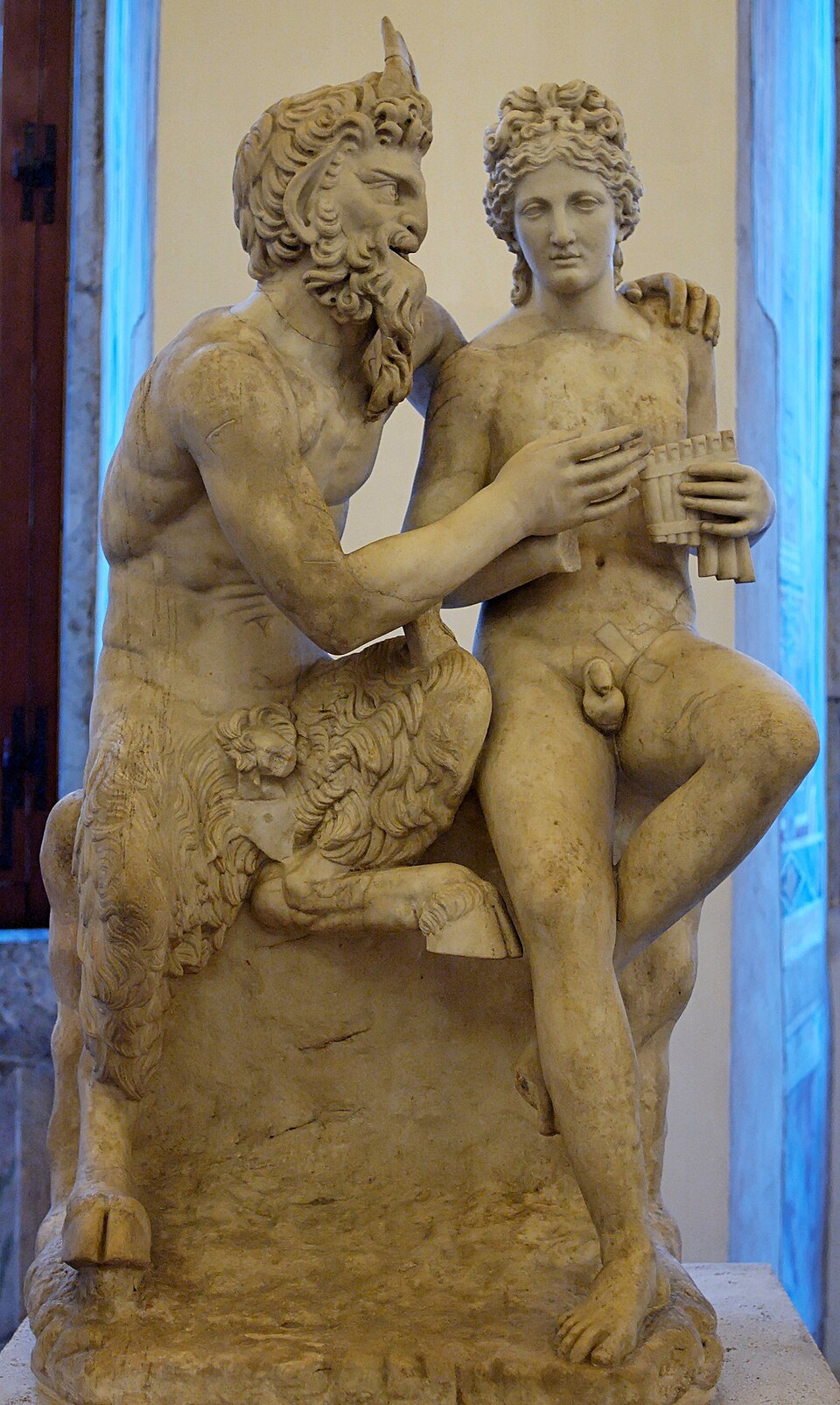
Marie-Lan Nguyen, Public domain, via Wikimedia Commons

Pan, “the dear son of Hermes, with his goat’s feet and two horns, a lover of merry noise”, roams the wooded glades and mountain peaks with dancing nymphs (Homeric Hymn 19.1–7). When he was born his mother fled from him, but Hermes carried him to Olympus, and all the gods were delighted, and so they called him Pan, “because he delighted all their hearts” (Homeric Hymn 19.34–47). Before Marathon he met the runner Pheidippides and promised help, and the Athenians gave him a shrine beneath the Acropolis (Herodotus 6.105).
Epithets
- Νόμιος · Nomios
- of the pastures
- Αἰγίπους · Aigipous
- goat-footed (Homeric Hymn 19.2, 37)
- Λύκαιος · Lykaios
- of Mount Lykaion in Arcadia (Pausanias 8.38.5)
Domains and symbols
Shepherds and flocks; wild places; music of the reed pipes; sudden fear, “panic”. Admire: freedom, joy in nature. Sacred symbols: the syrinx, the shepherd’s crook, the pine.
Myths
- His birth. The gods rejoiced at him, Dionysos most of all (Homeric Hymn 19.45–47).
- Marathon. He called Pheidippides by name on Mount Parthenion and asked why the Athenians neglected him (Herodotus 6.105).
- Syrinx. The nymph Syrinx became reeds, and from them he made his pipes (Ovid, Metamorphoses 1.689–712).
- Socrates’ prayer. “Beloved Pan, and all you other gods of this place, grant that I may become beautiful within” (Plato, Phaedrus 279b–c).
Cult sites
- Arcadia. His sanctuary on Mount Lykaion (Pausanias 8.38.5).
- Athens. The cave on the north slope of the Acropolis, given him after Marathon, with yearly sacrifices and a torch race (Herodotus 6.105).
- The Korykian cave. Above Delphi, sacred to Pan and the Nymphs (Pausanias 10.32.7).
Festivals
- Yearly sacrifice and torch race. At Athens, founded after Marathon (Herodotus 6.105).
Offerings
Milk, honey, music on reed pipes. Today: offer a song or a walk in the hills.
Beneath the Divine Mind
Pan is the Divine Mind as the life of wild nature: its music in field and mountain, personified and deified as the goat-footed son of Hermes. Like every god he stands beneath the One (The One and the Many). Socrates’ prayer to him asks for inner beauty, the first step on the path to henosis.
Honouring Pan today
- Outdoors. Pray to him in wild places.
- Prayer. Recite Socrates’ prayer (Phaedrus 279b–c).
- Hymn. Recite Homeric Hymn 19.
Hymn
Muse, tell me about Pan, the dear son of Hermes, with his goat’s feet and two horns—a lover of merry noise. Through wooded glades he wanders with dancing nymphs who foot it on some sheer cliff’s edge, calling upon Pan, the shepherd-god, long-haired, unkempt.Homeric Hymn 19, To Pan, 1–5. Homeric Hymns, tr. H. G. Evelyn-White (1914), public domain.
Images
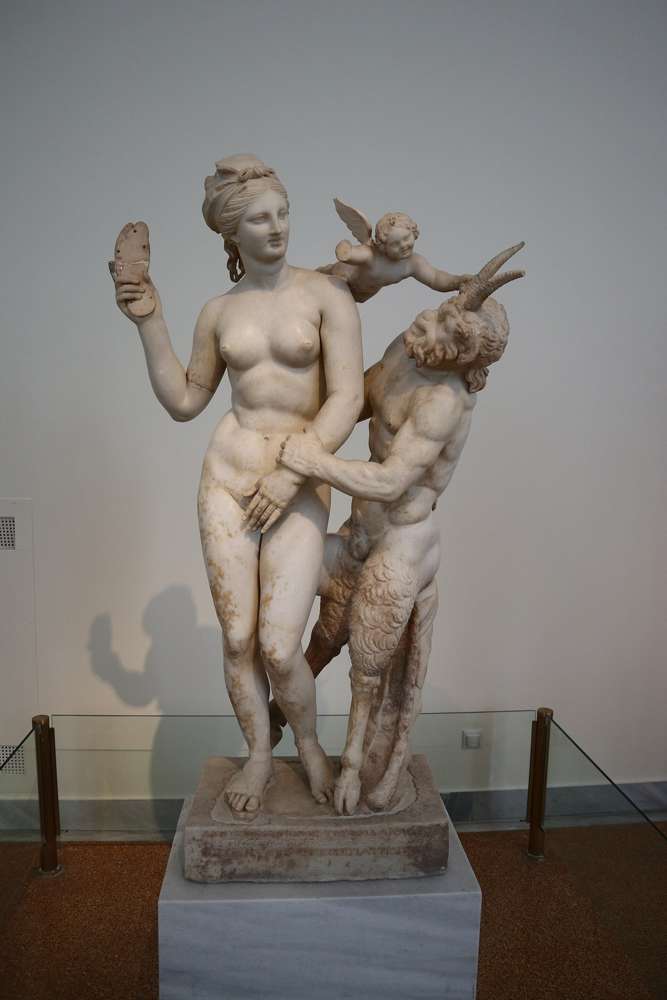
George E. Koronaios, CC0, via Wikimedia Commons

Sources
Homeric Hymn 19; Herodotus 6.105; Plato, Phaedrus 279b–c; Ovid, Metamorphoses 1.689–712; Pausanias 8.38.5 and 10.32.7.
Quotations in public-domain translations (Evelyn-White 1914, Butler 1898/1900, Taylor 1792); other authors paraphrased.