Carole Raddato, CC BY-SA 2.0, via Wikimedia Commons

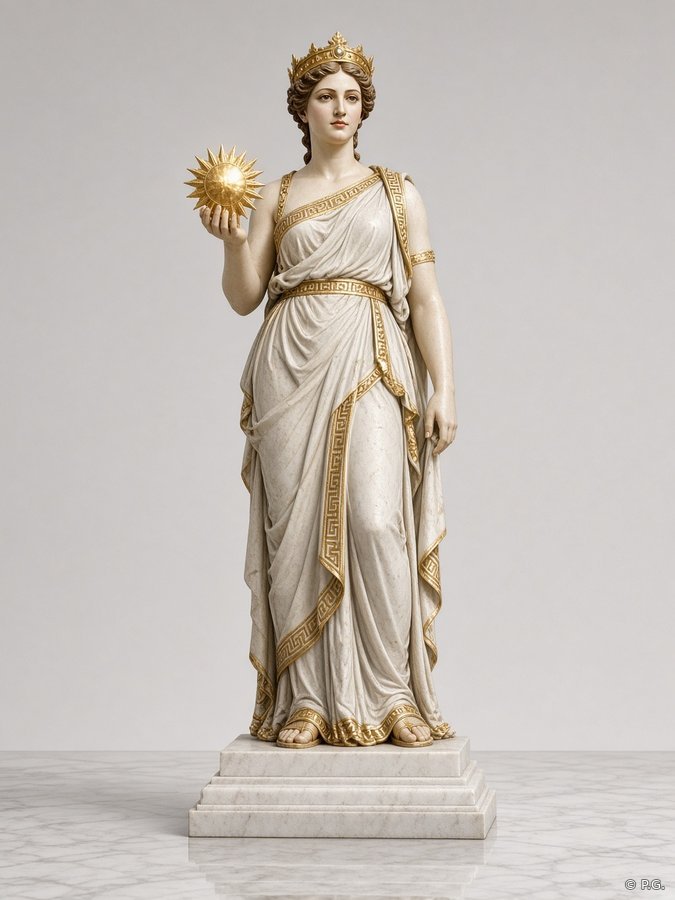
Theia, “the divine one”, is a Titaness, daughter of Ouranos and Gaia, named with “Theia and Rhea, Themis and Mnemosyne” (Theogony 135). “Theia was subject in love to Hyperion and bare great Helius (Sun) and clear Selene (Moon) and Eos (Dawn)” (Theogony 371–374). In the Homeric Hymn to Helios she is called Euryphaessa, “the wide-shining”, “mild-eyed Euryphaessa, the far-shining one” (Homeric Hymn 31.2).
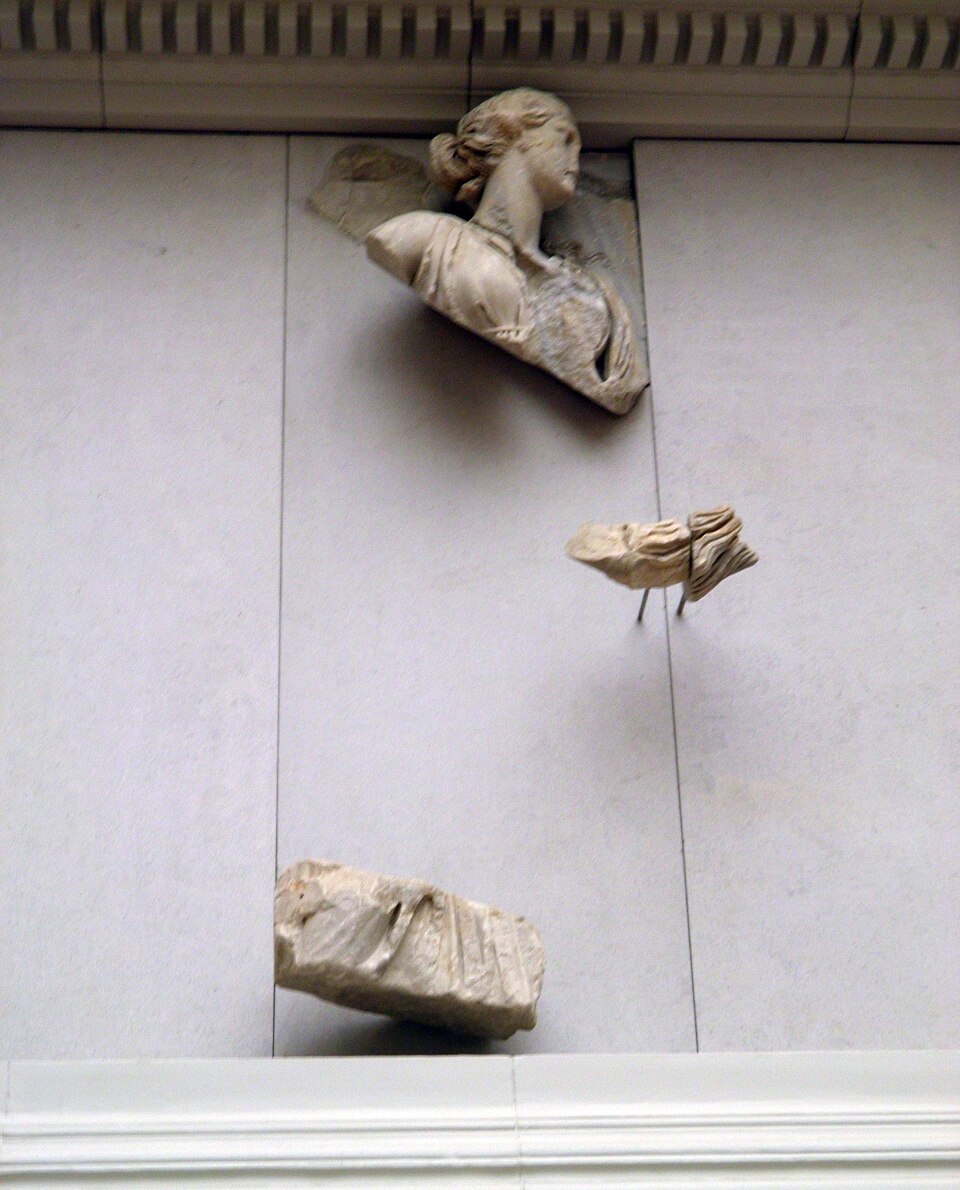
Pindar opens his fifth Isthmian ode with a prayer to her as the source of all brightness: Theia “of many names”, mother of the Sun, for whose sake men prize gold above all things, and through whom ships and horses win glory in the contest (Isthmian 5.1–6). On the Great Altar of Pergamon she fights beside her children Helios, Eos and Selene against the Giants.
Epithets
- Εὐρυφάεσσα · Euryphaessa
- wide-shining (Homeric Hymn 31.2)
- Πολυώνυμος · Polyonymos
- of many names (Pindar, Isthmian 5.1)
Domains and symbols
Light and its splendour: the gleam of gold and silver, the shining of the eye, the brightness that makes things precious. Admire: clear sight, the honour of excellence. Sacred symbols: gold, the eye, the three lights of heaven.
Myths
- Born of Heaven and Earth. One of the twelve Titans (Theogony 133–138).
- Mother of the lights. By Hyperion she bore Helios, Selene and Eos (Theogony 371–374; Homeric Hymn 31.4–7).
- Giver of the value of gold. Pindar names her as the reason men honour gold and the glory of victory (Isthmian 5.1–10).
- Against the Giants. On the Pergamon Altar she stands with Helios, Eos and Selene in the battle with the Giants (south frieze).
Offerings
No temple of Theia is recorded. Today: polished metal, a lit candle, or gold set in the light.
Beneath the Divine Mind
Theia is the Divine Mind as radiance: the light by which the excellent shines and is known. Pindar sees her in gold, in victory and in every brightness that men honour. Like every god she stands beneath the One (The One and the Many).
Honouring Theia today
- Light. Set a candle where its light falls on something precious.
- Excellence. Honour work well done; Pindar praised Theia before an athlete’s victory.
- Hymn. Recite the Orphic hymn to the Titans below.
Hymn
O Mighty Titans, who from heav'n and earth derive your noble and illustrious birth, Our fathers fires, in Tartarus profound who dwell, deep merg'd beneath the solid ground: Fountains and principles, from whom began th' afflicted, miserable, race of man.Orphic Hymn 37, To the Titans, opening lines. Tr. Thomas Taylor (1792), public domain; divine names as given on Hemera.
Sources
Hesiod, Theogony 133–138, 371–374; Homeric Hymn 31 (to Helios) 2–7; Pindar, Isthmian 5.1–10; Great Altar of Pergamon, south frieze; Orphic Hymn 37.
Quotations in public-domain translations (Evelyn-White 1914, Butler 1898/1900, Taylor 1792); other authors paraphrased.