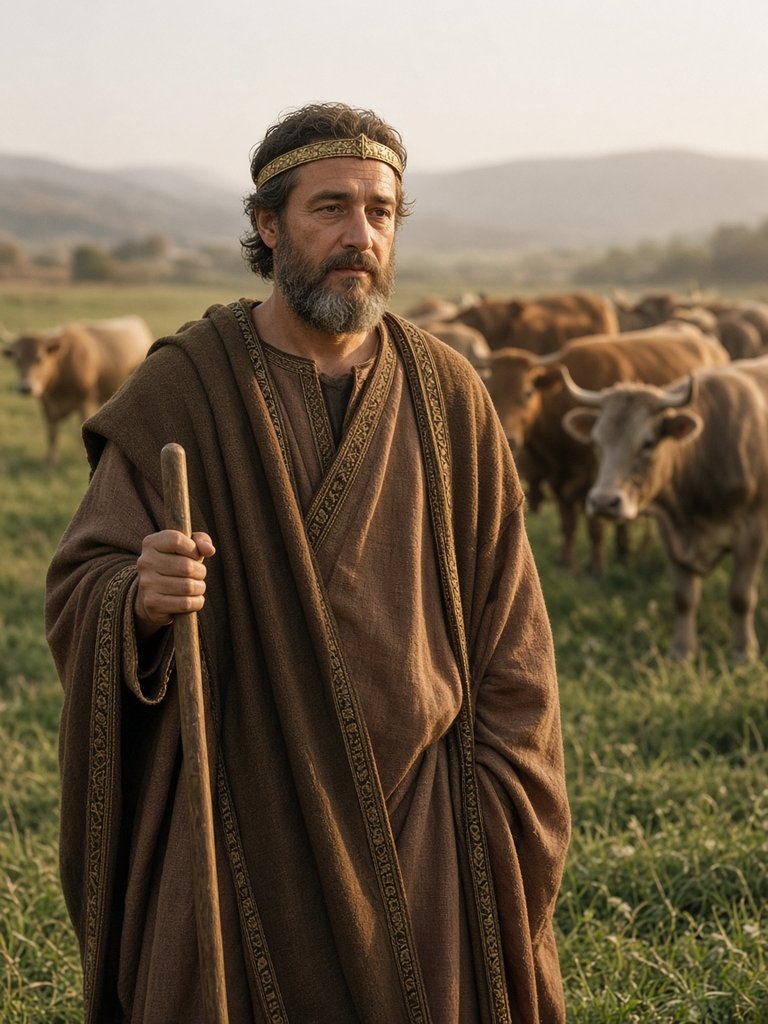
Admetos, son of Pheres, was king of Pherai in Thessaly. The Iliad names his son leading the men of Pherai: “Eumelus, son of Admetus, whom Alcestis bore to him, loveliest of the daughters of Pelias” (Iliad 2.713–715, tr. Butler). He sailed with the Argonauts and hunted the Kalydonian boar (Apollodorus 1.8.2, 1.9.16).
He was famous for his hospitality. When Zeus punished Apollo, the god served Admetos for a year as his herdsman and was treated kindly (Euripides, Alcestis 1–9; Apollodorus 3.10.4, paraphrased). To help him win Alkestis, daughter of Pelias, Apollo yoked a lion and a boar to his car (Apollodorus 1.9.15).
Apollo persuaded the Fates that Admetos might escape death if someone died in his place. His aged parents refused, but Alkestis gave her life; Herakles, arriving as a guest, wrestled Thanatos at her tomb and brought her back (Euripides, Alcestis, paraphrased).
Epithets
- Φέρητος υἱός · Pherētos huios
- son of Pheres
Symbols and virtues
Hospitality rewarded, and the gift of another’s life. Symbols: the herds of Apollo, the open door of the guest-house.
Myths
- Apollo as his herdsman. Euripides, Alcestis 1–9.
- Winning Alkestis. Apollodorus 1.9.15.
- Alkestis dies for him. Euripides, Alcestis.
- Father of Eumelos. Iliad 2.711–715.
In the poets
“Eumelus, son of Admetus, whom Alcestis bore to him, loveliest of the daughters of Pelias.”Homer, Iliad 2.713–715, tr. Samuel Butler (1898), public domain.
Sources
Homer, Iliad 2.711–715, 23.288–289; Euripides, Alcestis; Apollodorus 1.8.2, 1.9.15–16, 3.10.4.
Quotations in public-domain translations (Evelyn-White 1914, Butler 1898/1900, Taylor 1792); other authors paraphrased.