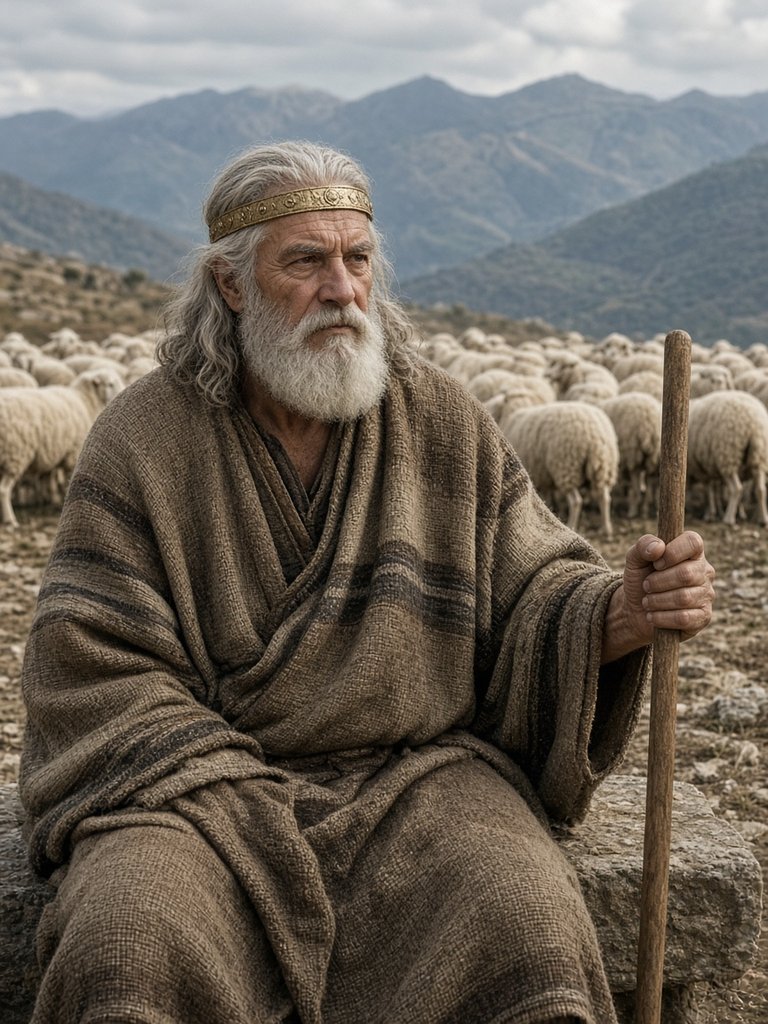
Pelias is a son of Poseidon and Tyro, twin of Neleus. Among the heroines in the underworld Odysseus hears of their birth: “she in due course bore Pelias and Neleus, who both of them served Jove with all their might. Pelias was a great breeder of sheep and lived in Iolcus, but the other lived in Pylos” (Odyssey 11.254–257, tr. Butler). His daughter Alkestis was “loveliest of the daughters of Pelias” (Iliad 2.715, tr. Butler).
He seized Iolkos from his half-brother Aison. Warned to beware a man with one sandal, he saw Aison’s son Iason arrive with one shoe lost in a river, and sent him to fetch the Golden Fleece (Apollodorus 1.9.16, paraphrased). Hesiod calls him “over bearing Pelias, that outrageous and presumptuous doer of violence” (Theogony 995–996, tr. Evelyn-White).
When Iason returned, Medeia persuaded the daughters of Pelias to cut up their father and boil him, promising to make him young again, and he did not rise (Apollodorus 1.9.27, paraphrased). His son Akastos held famous funeral games for him, carved on the chest of Kypselos at Olympia (Pausanias 5.17.9–11).
Epithets
- ὑπερήνωρ · hyperēnōr
- overbearing (Theogony 995)
- πολύρρηνος · polurrēnos
- rich in sheep (Odyssey 11.257)
Symbols and virtues
The usurper’s fear and its undoing. Symbols: the one sandal, the cauldron, the flocks.
Myths
- Birth from Poseidon. Odyssey 11.235–257.
- The man with one sandal. Apollodorus 1.9.16.
- The cauldron of Medeia. Apollodorus 1.9.27.
- Funeral games. Pausanias 5.17.9–11.
In the poets
“Pelias was a great breeder of sheep and lived in Iolcus, but the other lived in Pylos.”Homer, Odyssey 11.256–257, tr. Samuel Butler (1900), public domain.
Sources
Homer, Iliad 2.711–715; Odyssey 11.235–259; Hesiod, Theogony 993–999; Apollodorus 1.9.8–27; Pausanias 5.17.9–11.
Quotations in public-domain translations (Evelyn-White 1914, Butler 1898/1900, Taylor 1792); other authors paraphrased.