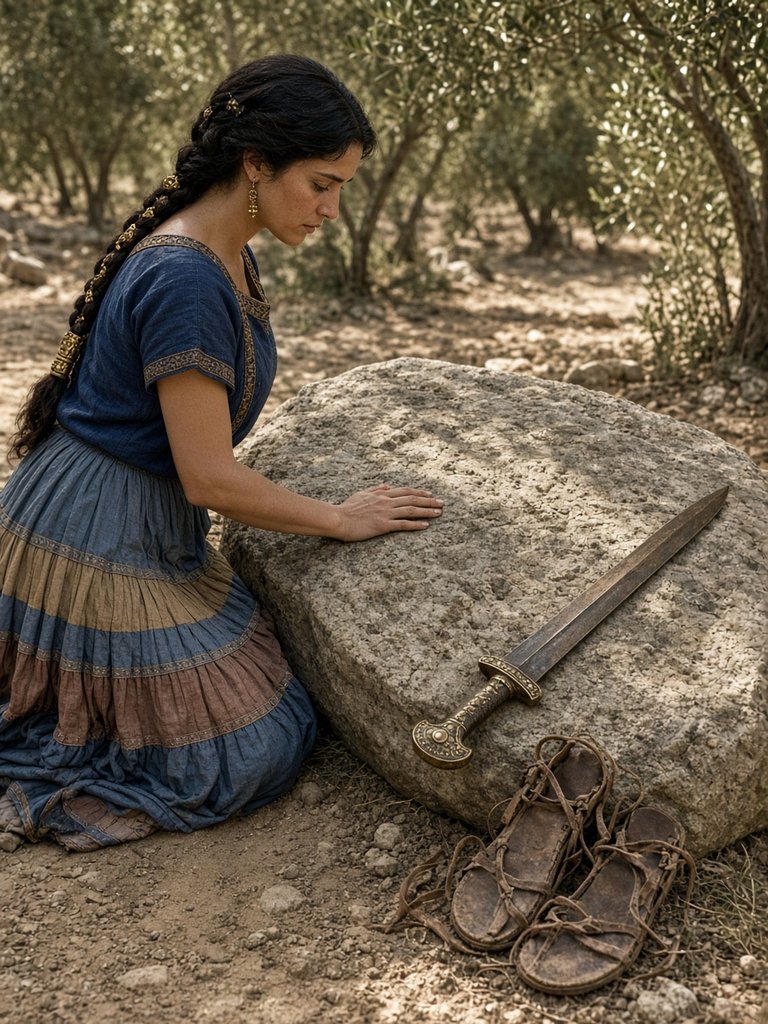
Aithra, daughter of King Pittheus of Troizen, is the mother of Theseus by Aigeus of Athens (and, some said, by Poseidon the same night). Aigeus left a sword and sandals under a great rock and told her to send the boy to Athens when he was strong enough to lift it (Plutarch, Theseus 3–6, paraphrased).
When Theseus carried off the young Helen, he left her in Aithra’s care at Aphidna. The Dioskouroi rescued their sister and took Aithra captive, and she went with Helen to Troy as her servant (Plutarch, Theseus 31–34, paraphrased). Homer names her among Helen’s attendants on the walls: “attended by two of her handmaids, Aethrae, daughter of Pittheus, and Clymene” (Iliad 3.143–144, tr. Butler).
At the sack of Troy her grandsons Akamas and Demophon found her and brought her home (Proclus, summary of the Sack of Ilion; Pausanias 10.25.8, paraphrased).
Epithets
- Πιτθῆος θυγάτηρ · Pitthēos thugatēr
- daughter of Pittheus (Iliad 3.144)
Symbols and virtues
A mother’s secret and long captivity. Symbols: the rock, the sword and sandals.
Myths
- The sword under the rock. Plutarch, Theseus 3–6.
- Captive of the Dioskouroi. Plutarch, Theseus 31–34.
- With Helen at Troy. Iliad 3.143–144.
- Freed by her grandsons. Pausanias 10.25.8.
In the poets
“Attended by two of her handmaids, Aethrae, daughter of Pittheus, and Clymene.”Homer, Iliad 3.143–144, tr. Samuel Butler (1898), public domain.
Sources
Homer, Iliad 3.143–144; Plutarch, Theseus 3–6, 31–34; Proclus, Chrestomathy (Sack of Ilion); Pausanias 10.25.8.
Quotations in public-domain translations (Evelyn-White 1914, Butler 1898/1900, Taylor 1792); other authors paraphrased.