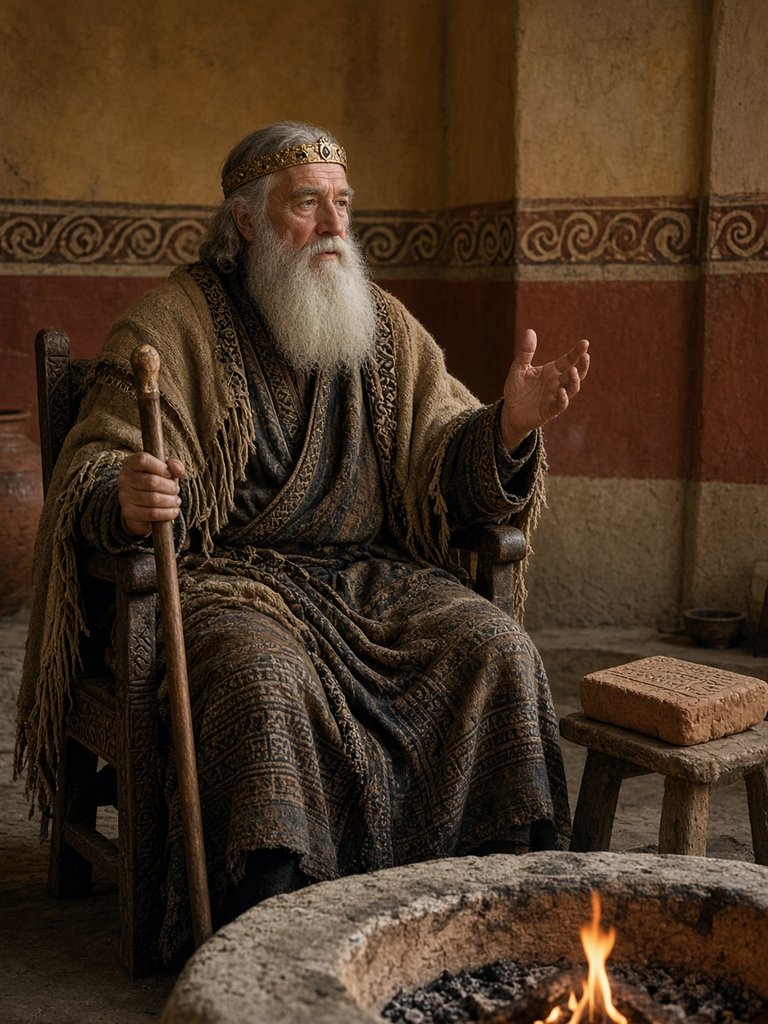
Pittheus, a son of Pelops, was king of Troizen and the wisest man of his age (Pausanias 2.30.8, 2.31.3, paraphrased). In Euripides’ Medea, Aigeus is on his way to Pittheus, the most learned and pious of men, to have him explain the Delphic oracle about his childlessness (Medea 682–686, paraphrased).
Understanding the oracle, Pittheus made Aigeus drunk and put him to bed with his daughter Aithra; from that night came Theseus, who was brought up in his grandfather’s house at Troizen (Apollodorus 3.15.7; Plutarch, Theseus 3–4, paraphrased). Later Theseus’ son Hippolytos was also raised by Pittheus (Euripides, Hippolytus 10–11, paraphrased).
The Iliad remembers his daughter at Troy among the handmaids of Helen: “attended by two of her handmaids, Aethrae, daughter of Pittheus, and Clymene” (Iliad 3.143–144, tr. Butler). Pausanias saw at Troizen the seat from which he gave judgment, and his tomb, and says that he taught the art of speaking (Pausanias 2.31.3, 2.31.8, paraphrased).
Epithets
- σοφός · sophos
- the wise
Symbols and virtues
Wisdom, judgment and the raising of heroes. Symbols: the seat of judgment, the staff.
Myths
- Interpreter of Aigeus’ oracle. Euripides, Medea 682–686.
- Grandfather of Theseus. Apollodorus 3.15.7; Plutarch, Theseus 3–4.
- Father of Aithra. Iliad 3.143–144.
- Teacher of speech. Pausanias 2.31.3.
Cult and places
- Troizen. His tomb and his seat of judgment were shown there (Pausanias 2.31.3, 2.31.8).
In the poets
“Attended by two of her handmaids, Aethrae, daughter of Pittheus, and Clymene.”Homer, Iliad 3.143–144, tr. Samuel Butler (1898), public domain.
Sources
Homer, Iliad 3.143–144; Euripides, Medea 682–686, Hippolytus 10–11; Apollodorus 3.15.7; Plutarch, Theseus 3–4; Pausanias 2.30.8–2.31.8.
Quotations in public-domain translations (Evelyn-White 1914, Butler 1898/1900, Taylor 1792); other authors paraphrased.