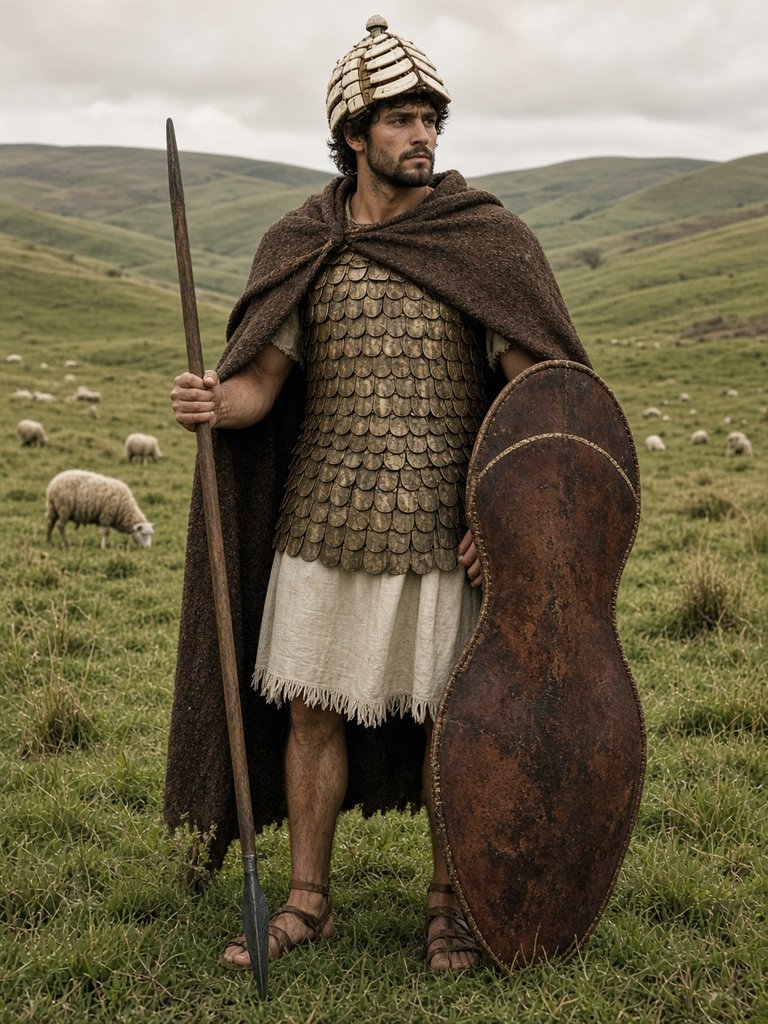
Iphidamas is a son of Antenor and Theano. When Agamemnon sweeps through the Trojans, Homer calls on the Muses to say who first faced him: “It was Iphidamas son of Antenor, a man both brave and of great stature, who was brought up in fertile Thrace, the mother of sheep. Cisses, his mother’s father, brought him up in his own house when he was a child” (Iliad 11.221–224, tr. Butler).
His grandfather gave him his daughter in marriage, but he left his bride at once to fight at Troy with twelve ships. His spear-thrust bends on Agamemnon’s belt like lead, and Agamemnon kills him. Homer pities him, a young husband who never knew the joy of his wife, for whom he had given so many gifts (Iliad 11.225–247, paraphrased).
His elder brother Koon, seeing him fall, wounds Agamemnon in the arm, and is killed over his brother’s body (Iliad 11.248–263, paraphrased).
Epithets
- Ἀντηνορίδης · Antēnoridēs
- son of Antenor
- ἠΰς τε μέγας τε · ēus te megas te
- brave and of great stature (Iliad 11.221)
Symbols and virtues
The young husband lost to war. Symbols: the bridal gifts, the bent spear.
Myths
- Raised in Thrace. Iliad 11.221–230.
- Facing Agamemnon. Iliad 11.231–247.
- Koon’s revenge. Iliad 11.248–263.
In the poets
“It was Iphidamas son of Antenor, a man both brave and of great stature, who was brought up in fertile Thrace, the mother of sheep.”Homer, Iliad 11.221–222, tr. Samuel Butler (1898), public domain.
Sources
Homer, Iliad 11.218–263.
Quotations in public-domain translations (Evelyn-White 1914, Butler 1898/1900, Taylor 1792); other authors paraphrased.