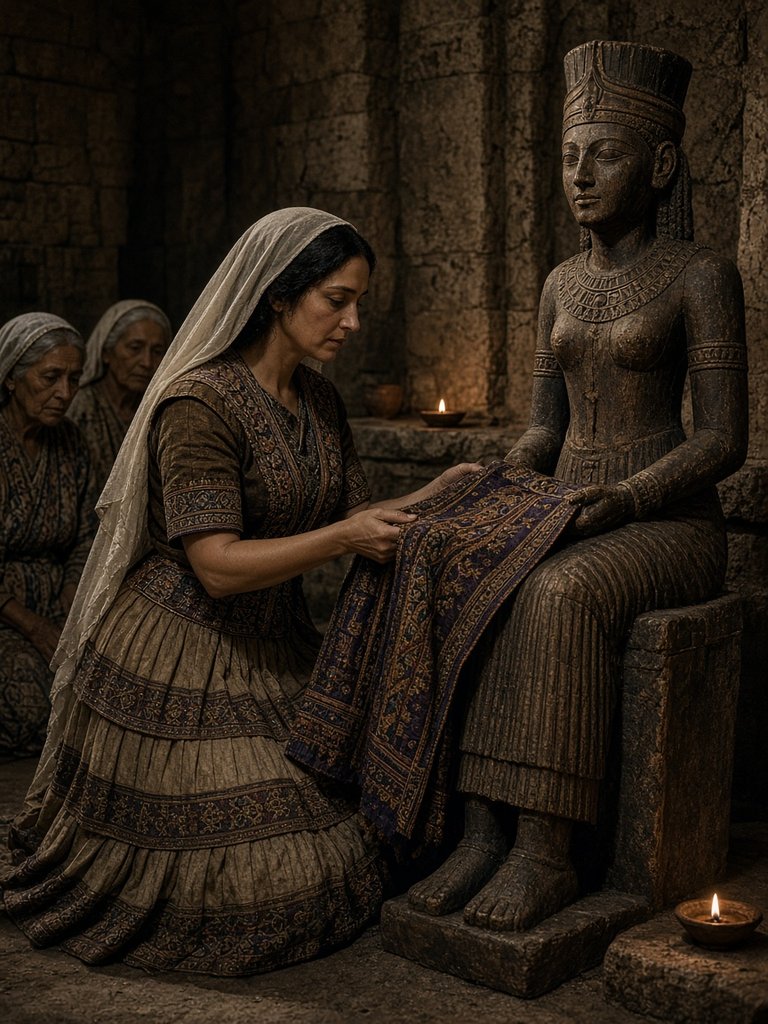
Theano, daughter of Kisseus king of Thrace, is the wife of Antenor and the priestess of Athena at Troy. Her generosity is noted even in battle: she brought up her husband’s son Pedaios by another woman “as one of her own children, for the love she bore her husband” (Iliad 5.70–71, tr. Butler).
When Hekabe brings the finest robe in the palace to Athena’s temple, “lovely Theano, daughter of Cisseus and wife of Antenor, opened the doors, for the Trojans had made her priestess of Minerva” (Iliad 6.298–300, tr. Butler). She lays the robe on the knees of the goddess and prays her to break the spear of Diomedes, but Athena refuses (Iliad 6.301–311, paraphrased).
Many of her sons died in the war, among them Iphidamas and Koon, killed by Agamemnon (Iliad 11.221–263); Agenor was another. Pausanias saw her shown with her family in Polygnotos’ painting of the sack of Troy at Delphi (10.27.3–4, paraphrased).
Epithets
- καλλιπάρῃος · kalliparēos
- fair-cheeked (Iliad 6.298)
- Κισσηΐς · Kissēïs
- daughter of Kisseus
Symbols and virtues
Priestly service and a mother’s losses. Symbols: the woven robe, the temple doors.
Myths
- Pedaios. Iliad 5.69–71.
- The robe for Athena. Iliad 6.286–311.
- Her sons. Iliad 11.221–263.
Cult and places
- Troy. Priestess in the temple of Athena on the citadel (Iliad 6.297–300).
In the poets
“Lovely Theano, daughter of Cisseus and wife of Antenor, opened the doors, for the Trojans had made her priestess of Minerva.”Homer, Iliad 6.298–300, tr. Samuel Butler (1898), public domain.
Sources
Homer, Iliad 5.69–71, 6.286–311, 11.221–263; Pausanias 10.27.3–4.
Quotations in public-domain translations (Evelyn-White 1914, Butler 1898/1900, Taylor 1792); other authors paraphrased.