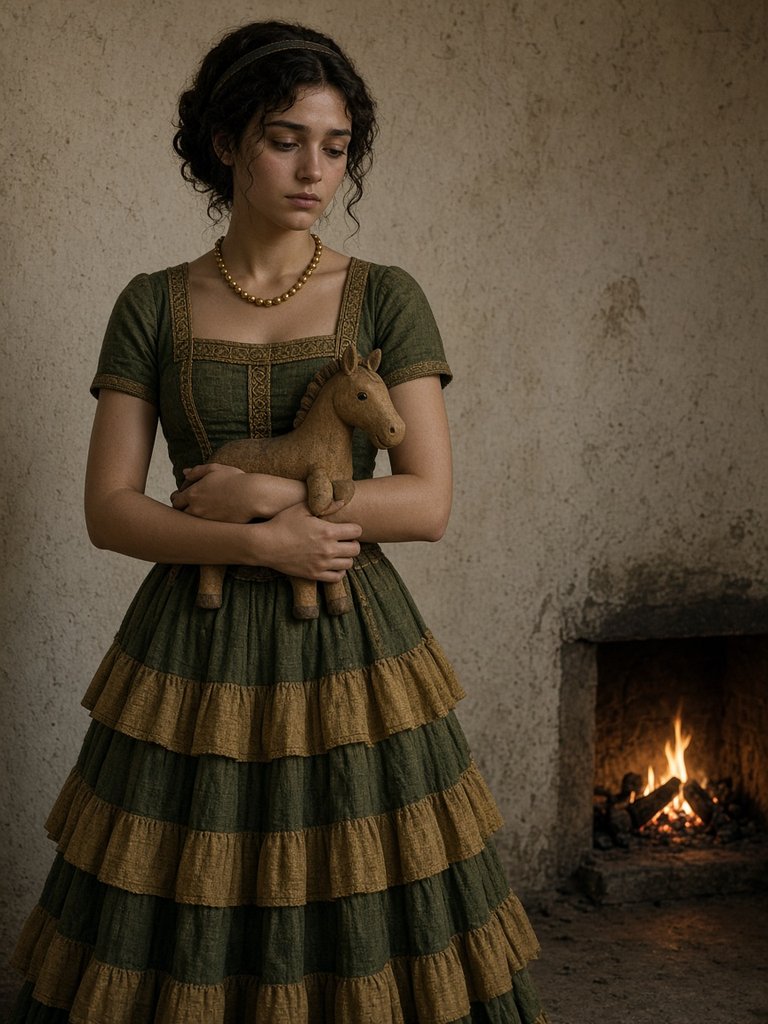
Megara is the daughter of King Kreon of Thebes. Odysseus sees her among the heroines in the underworld: “Then I saw Alcmena, the wife of Amphitryon, who also bore to Jove indomitable Hercules; and Megara who was daughter to great King Creon, and married the redoubtable son of Amphitryon” (Odyssey 11.266–270, tr. Butler).
Kreon gave her to Herakles after he freed Thebes from tribute to the Minyans of Orchomenos, and she bore him sons (Apollodorus 2.4.11, paraphrased). Hera then sent madness on Herakles, and he killed their children; it was to atone for this that he served Eurystheus and performed his labours (Apollodorus 2.4.12, paraphrased).
In Euripides’ Heracles, Megara and her sons are saved from the tyrant Lykos by Herakles’ return, only for Herakles, maddened by Hera, to kill them all (Heracles 822–1015, paraphrased). In Apollodorus she survives and Herakles gives her to Iolaos (2.6.1).
Epithets
- Κρείοντος θυγάτηρ · Kreiontos thugatēr
- daughter of Kreon (Odyssey 11.269)
Symbols and virtues
The innocent family destroyed by a god’s anger. Symbols: the hearth, the children.
Myths
- Among the heroines in Hades. Odyssey 11.266–270.
- Wife of Herakles. Apollodorus 2.4.11.
- The madness of Herakles. Euripides, Heracles; Apollodorus 2.4.12.
- Given to Iolaos. Apollodorus 2.6.1.
In the poets
“Megara who was daughter to great King Creon, and married the redoubtable son of Amphitryon.”Homer, Odyssey 11.269–270, tr. Samuel Butler (1900), public domain.
Sources
Homer, Odyssey 11.266–270; Pindar, Isthmian 4.61–64; Euripides, Heracles; Apollodorus 2.4.11–12, 2.6.1; Pausanias 9.11.2.
Quotations in public-domain translations (Evelyn-White 1914, Butler 1898/1900, Taylor 1792); other authors paraphrased.