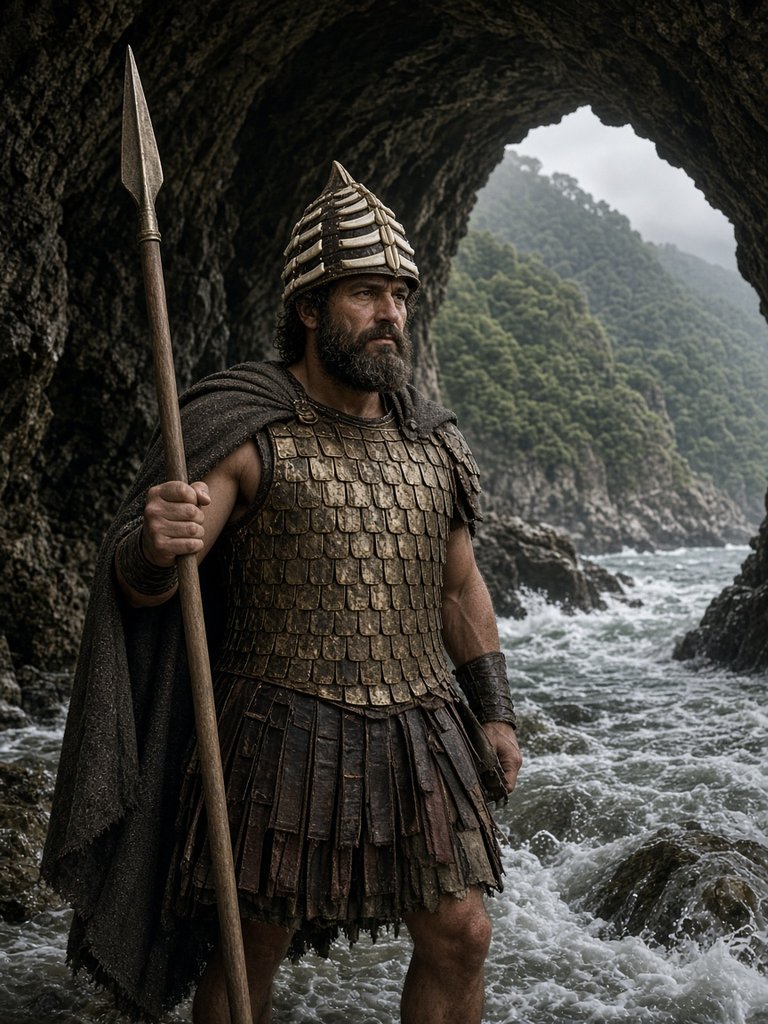
Peleus, son of Aiakos, is king of the Myrmidons in Phthia and father of Achilles. Hesiod tells how the sea-goddess Thetis bore Achilles to him (Theogony 1006–1007, paraphrased). Pindar tells how he wrestled with her while she changed into fire and into the claws of a lion (Nemean 4.62–65, paraphrased), and all the gods came to the wedding (Iliad 24.62–63, paraphrased).
In Homer he is the old father far away. Achilles, speaking to Priam, uses him as an example of human fate: “Even so did it befall Peleus; the gods endowed him with all good things from his birth upwards, for he reigned over the Myrmidons excelling all men in prosperity and wealth, and mortal though he was they gave him a goddess for his bride” (Iliad 24.534–537, tr. Butler).
Later writers say he and his brother Telamon were exiled from Aegina for killing their half-brother Phokos, and that he sailed with the Argonauts and hunted the Calydonian boar (Apollodorus 3.12.6–3.13.5, paraphrased). Nestor remembers finding him in his courtyard pouring wine over a sacrifice to Zeus (Iliad 11.769–775, paraphrased).
Epithets
- Αἰακίδης · Aiakidēs
- son of Aiakos
- ἱππηλάτα · hippēlata
- driver of horses
Symbols and virtues
Fortune given and taken by the gods; a mortal wedded to a goddess. Symbols: the spear of Pelian ash (Iliad 16.140–144).
Myths
- Wrestling Thetis. Pindar, Nemean 4.62–65.
- The wedding. Iliad 24.62–63.
- Father of Achilles. Theogony 1006–1007.
- Exile and the Argo. Apollodorus 3.12.6–3.13.5.
In the poets
“The gods endowed him with all good things from his birth upwards, for he reigned over the Myrmidons excelling all men in prosperity and wealth, and mortal though he was they gave him a goddess for his bride.”Homer, Iliad 24.534–537, tr. Samuel Butler (1898), public domain.
Sources
Hesiod, Theogony 1006–1007; Homer, Iliad 11.769–775, 16.140–144, 24.62–63, 24.534–542; Pindar, Nemean 4; Apollodorus 3.12.6–3.13.5.
Quotations in public-domain translations (Evelyn-White 1914, Butler 1898/1900, Taylor 1792); other authors paraphrased.