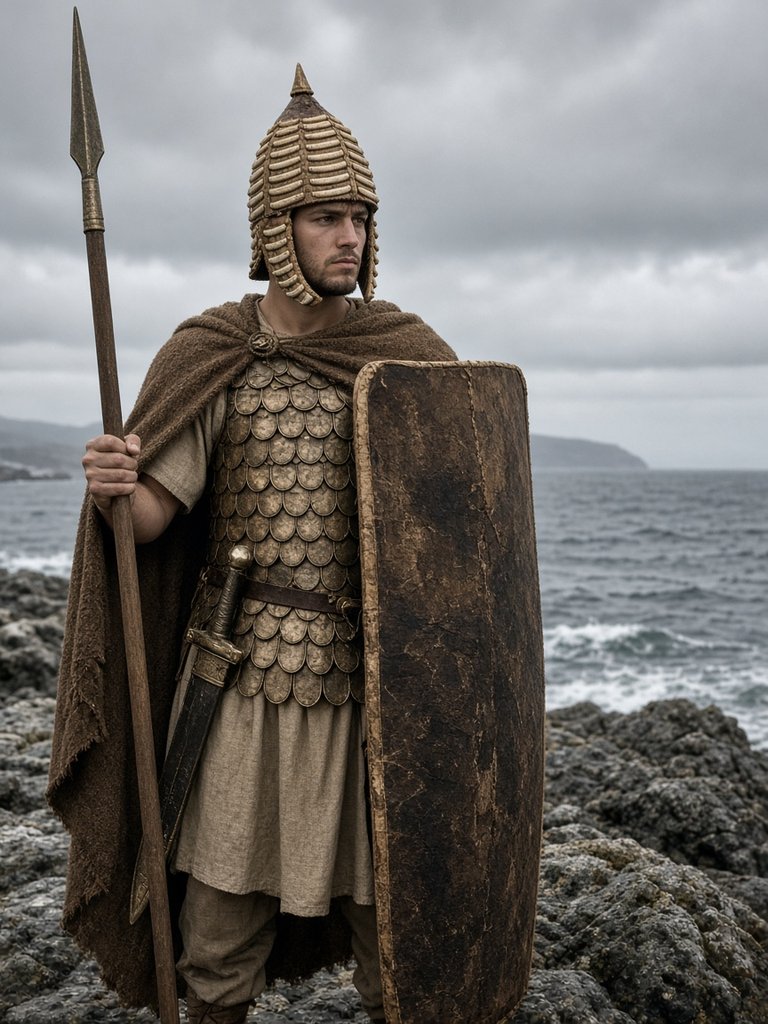
Pylades, son of Strophios, king of Phokis, and of Anaxibia, sister of Agamemnon, grew up with his cousin Orestes after Orestes was sent away from Mycenae (Pausanias 2.29.4; Euripides, Electra 15–18, paraphrased). The two became the type of perfect friendship.
He went with Orestes to Argos to avenge Agamemnon. In Aeschylus’ Libation Bearers he speaks only once, when Orestes hesitates before killing his mother, reminding him of the oracle of Apollo (Libation Bearers 900–902, paraphrased). In Euripides’ Orestes he stands by his friend in the trial at Argos and in the attack on Helen (Orestes 729–806, 1105–1245, paraphrased).
In Euripides’ Iphigenia among the Taurians he and Orestes are captured in the land of the Taurians, and each insists on dying for the other until their priestess is revealed as Iphigeneia (Iphigenia among the Taurians 597–722, paraphrased). He married Orestes’ sister Elektra, and their sons were Medon and Strophios (Euripides, Electra 1249; Pausanias 2.16.7, paraphrased).
Epithets
- Πυλάδης · Pyladēs
- Pylades
Symbols and virtues
Faithful friendship to death. Symbols: the companion at the side, the oracle of Apollo.
Myths
- Raised with Orestes in Phokis. Pausanias 2.29.4; Euripides, Electra 15–18.
- The vengeance at Argos. Aeschylus, Libation Bearers 900–902.
- The trial and the attack on Helen. Euripides, Orestes.
- Among the Taurians. Euripides, Iphigenia among the Taurians 597–722.
- Husband of Elektra. Euripides, Electra 1249; Pausanias 2.16.7.
Sources
Aeschylus, Libation Bearers 900–902; Sophocles, Electra; Euripides, Electra, Orestes, Iphigenia among the Taurians; Pausanias 1.22.6, 2.16.7, 2.29.4.
Quotations in public-domain translations (Evelyn-White 1914, Butler 1898/1900, Taylor 1792); other authors paraphrased.