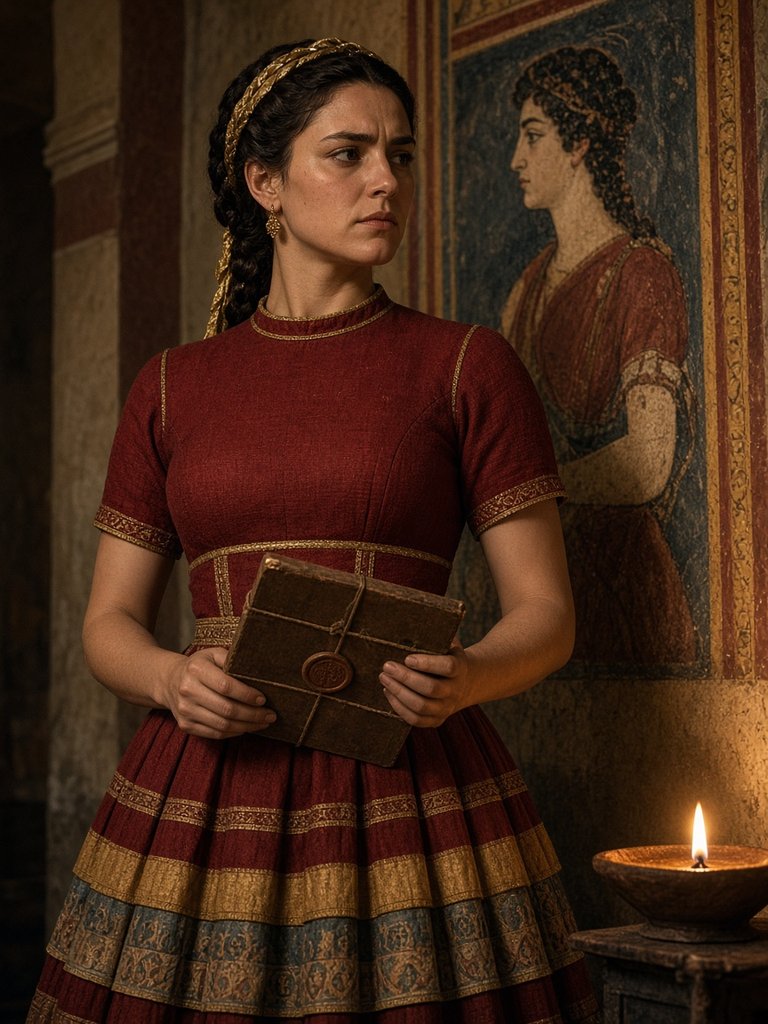
Anteia is the wife of Proitos, king of Tiryns. In the Iliad, Glaukos tells her story when he recounts the deeds of his grandfather Bellerophon: “For Antea, wife of Proetus, lusted after him, and would have had him lie with her in secret; but Bellerophon was an honourable man and would not, so she told lies about him to Proetus” (Iliad 6.160–163, tr. Butler).
Proitos would not kill a guest himself. He sent Bellerophon to Anteia’s father, the king of Lykia, with a folded tablet bearing deadly signs, asking that he be put to death (Iliad 6.167–170, paraphrased). The Lykian king set him to fight the Chimaira, the Solymoi and the Amazons, and he survived them all (Iliad 6.171–195, paraphrased).
In the tragedians she is called Stheneboia, the heroine of Euripides’ lost Stheneboia, in which Bellerophon later takes his revenge on her. The tale is the Greek form of the story of the slighted wife found also in the Joseph story and in Phaidra and Hippolytos.
Epithets
- δῖα · dia
- noble, royal (Iliad 6.160)
- Σθενέβοια · Stheneboia
- her name in tragedy
Symbols and virtues
Desire refused turned to slander. Symbols: the folded tablet with its deadly signs.
Myths
- The false accusation. Iliad 6.155–166.
- The tablet. Iliad 6.167–170.
- Stheneboia. Euripides, Stheneboia (fragments).
In the poets
“Antea, wife of Proetus, lusted after him, and would have had him lie with her in secret; but Bellerophon was an honourable man and would not.”Homer, Iliad 6.160–162, tr. Samuel Butler (1898), public domain.
Sources
Homer, Iliad 6.155–195; Euripides, Stheneboia (fragments); Apollodorus 2.3.1.
Quotations in public-domain translations (Evelyn-White 1914, Butler 1898/1900, Taylor 1792); other authors paraphrased.