Boreas, the North Wind, is a son of Astraios and Eos: “And Eos bare to Astraeus the strong-hearted winds, brightening Zephyrus, and Boreas, headlong in his course, and Notus, -- a goddess mating in love with a god” (Theogony 378–380). Hesiod counts him among the good winds: “except Notus and Boreas and clear Zephyr. These are a god-sent kind, and a great blessing to men” (Theogony 869–871). In the Iliad he fell in love with the mares of Erichthonios and “covered them in the semblance of a dark-maned stallion”, and their twelve foals ran over the corn without breaking it (Iliad 20.221–229, tr. Samuel Butler (1898), public domain); Achilles prays to “the two winds Boreas and Zephyrus” to kindle the pyre of Patroklos (Iliad 23.194–198).
Boreas carried off Oreithyia, daughter of the Athenian king Erechtheus, and by her fathered Kalais and Zetes, the winged Argonauts, and the daughters Kleopatra and Chione (Apollodorus 3.15.2). The Athenians therefore called him their kinsman: before the battle of Artemision they prayed to him, and after the storm that wrecked the Persian fleet they built him a sanctuary by the Ilissos (Herodotus 7.189). Socrates points out the place by the river where the girl was said to have been snatched (Plato, Phaedrus 229b–d). At Megalopolis he had a sanctuary and yearly sacrifices for saving the city from the Spartans (Pausanias 8.36.6).
Epithets
- Αἰψηροκέλευθος · Aipserokeleuthos
- headlong in his course (Theogony 379)
- Θεόφιν γενεή · theophin genee
- of the god-sent kind of winds (Theogony 871)
Domains and symbols
The cold north wind, winter, the clearing storm. Admire: strength, decisive help in need. Sacred symbols: wings, the conch, the cloak against cold, the horse.
Myths
- Son of Astraios and Eos. Theogony 378–380.
- A good wind. Theogony 869–871.
- The mares of Erichthonios. Iliad 20.221–229.
- The pyre of Patroklos. Achilles prays to him and Zephyros (Iliad 23.192–230).
- Oreithyia. He carries her off; father of Kalais and Zetes (Apollodorus 3.15.2; Plato, Phaedrus 229b–d).
- Artemision. He wrecks the Persian fleet (Herodotus 7.189).
Cult sites
- Athens, by the Ilissos. His sanctuary after Artemision (Herodotus 7.189; Plato, Phaedrus 229c).
- Megalopolis. Sanctuary and yearly sacrifice (Pausanias 8.36.6).
Offerings
Achilles vowed the winds rich offerings and poured drink-offerings from a golden cup (Iliad 23.194–198). The Athenians gave him sacrifice after Artemision (Herodotus 7.189). Today: a libation to the wind on a cold clear day.
Beneath the Divine Mind
Boreas is the Divine Mind as clearing power: the cold wind that sweeps the sky and lets the light through. Like every god he stands beneath the One (The One and the Many).
Honouring Boreas today
- Libation. Pour a little wine or water to the north wind.
- Help. Give swift help to someone in need.
- Hymn. Recite the Orphic hymn to Boreas below.
Hymn
Boreas, whose wint'ry blasts, terrific, tear the bosom of the deep surrounding air; Cold icy pow'r, approach, and fav'ring blow, and Thrace a while desert expos'd to snow: The misty station of the air dissolve, with pregnant clouds, whose frames in show'rs resolve: Serenely temper all within the sky, and wipe from moisture, Æther's beauteous eye.Orphic Hymn 80, To Boreas. Tr. Thomas Taylor (1792), public domain.
Images
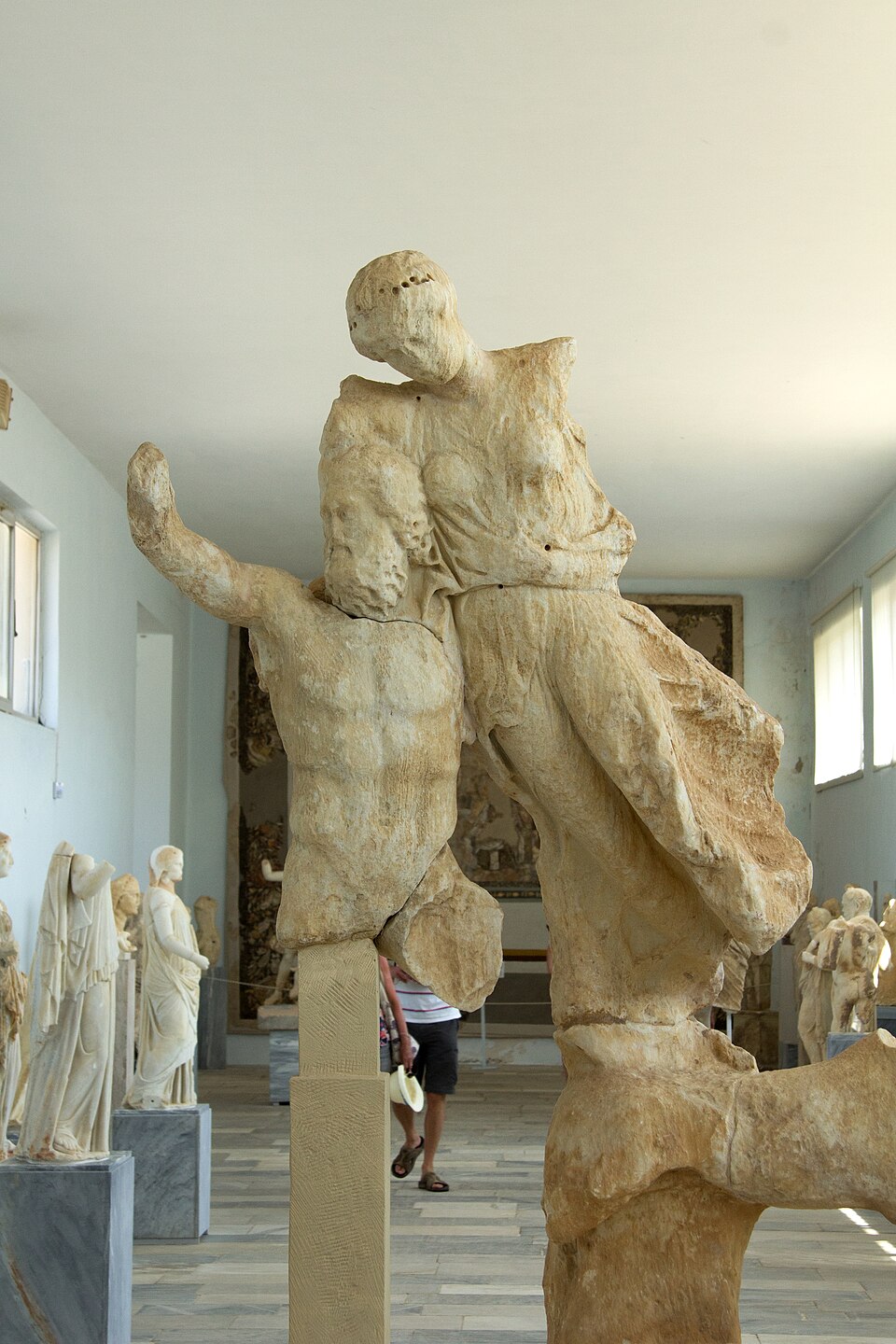
Zde, CC BY-SA 4.0, via Wikimedia Commons

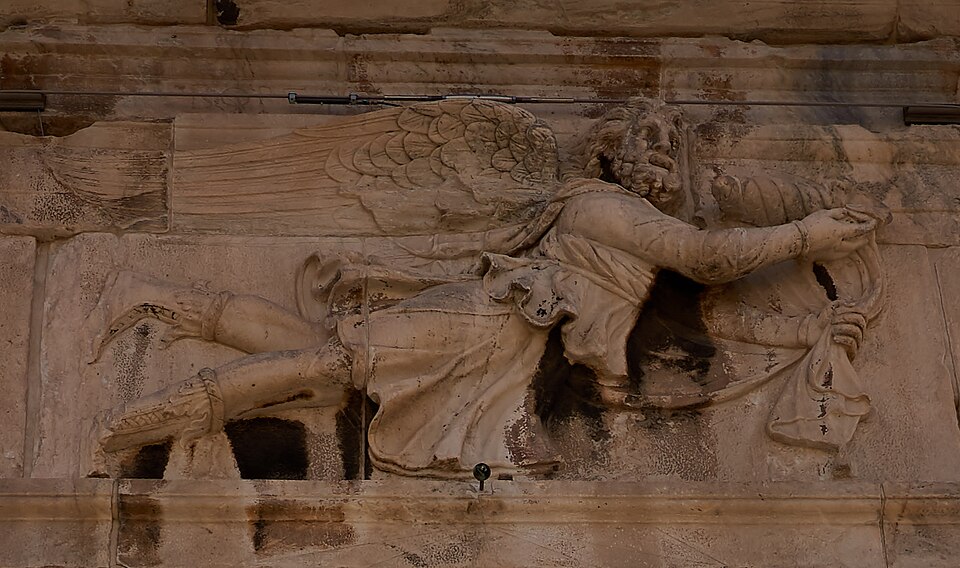
George E. Koronaios, CC BY-SA 4.0, via Wikimedia Commons

Sources
Hesiod, Theogony 378–380, 869–871; Homer, Iliad 20.221–229, 23.192–230; Herodotus 7.189; Plato, Phaedrus 229b–d; Apollodorus, Library 3.15.2; Pausanias 8.36.6; Orphic Hymn 80.
Quotations in public-domain translations (Evelyn-White 1914, Butler 1898/1900, Taylor 1792); other authors paraphrased.