Daidalos is the legendary craftsman of Athens. Homer knows him already: on the shield of Achilles Hephaistos “wrought a green, like that which Daedalus once made in Cnossus for lovely Ariadne” (Iliad 18.590–592, tr. Butler). Later writers make him an Athenian of the royal house who killed his gifted nephew Talos out of jealousy and fled to Crete (Apollodorus 3.15.8; Diodorus 4.76, paraphrased).
In Crete he served Minos. He built the hollow wooden cow for Pasiphae and then the Labyrinth in which the Minotaur was kept, and he gave Ariadne the clue of thread by which Theseus found his way out (Apollodorus 3.1.4, Epitome 1.8–9, paraphrased).
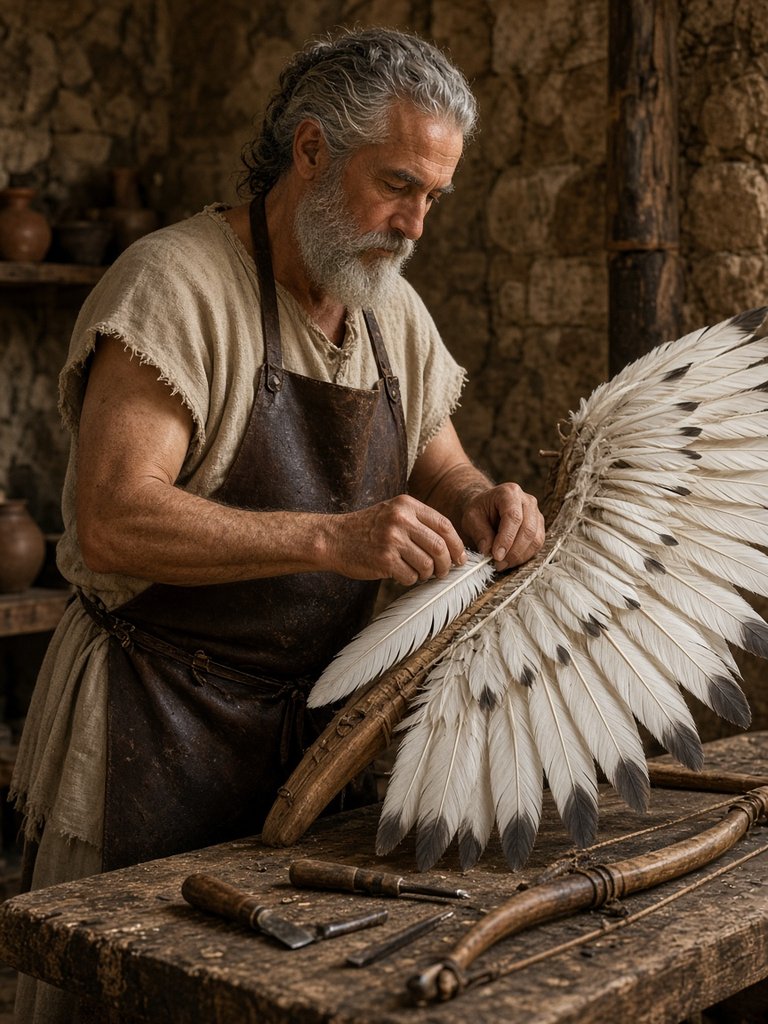
Shut in by Minos, he made wings of feathers and wax for himself and his son Ikaros and flew from Crete; Ikaros fell, but Daidalos reached Sicily and the court of King Kokalos, whose daughters killed Minos when he came in pursuit (Apollodorus, Epitome 1.12–15; Diodorus 4.77–79; Herodotus 7.169–170, paraphrased). Statues so lifelike that they seemed to move were called works of Daidalos (Plato, Meno 97d, paraphrased).
Epithets
- Δαίδαλος · Daidalos
- the cunning worker
Symbols and virtues
Human craft and invention, and its dangers. Symbols: the axe and drill, the Labyrinth, the wings.
Myths
- The dancing-floor of Ariadne. Iliad 18.590–592.
- The death of Talos and the flight to Crete. Apollodorus 3.15.8.
- The cow of Pasiphae and the Labyrinth. Apollodorus 3.1.4.
- The wings and the flight. Apollodorus, Epitome 1.12; Ovid, Metamorphoses 8.183–235.
- Kokalos and the death of Minos. Apollodorus, Epitome 1.13–15; Herodotus 7.170.
In the poets
“Furthermore he wrought a green, like that which Daedalus once made in Cnossus for lovely Ariadne.”Homer, Iliad 18.590–592, tr. Samuel Butler (1898), public domain.
Sources
Homer, Iliad 18.590–592; Herodotus 7.169–170; Plato, Meno 97d; Diodorus 4.76–79; Apollodorus 3.1.4, 3.15.8, Epitome 1.8–15; Ovid, Metamorphoses 8.183–259.
Quotations in public-domain translations (Evelyn-White 1914, Butler 1898/1900, Taylor 1792); other authors paraphrased.