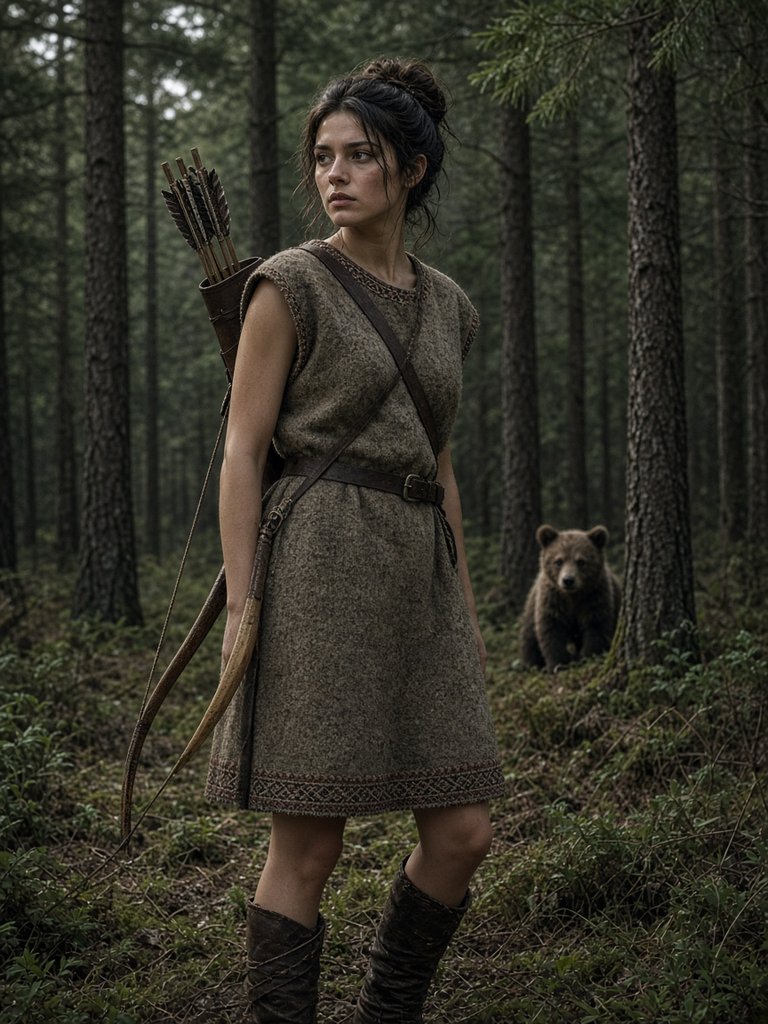
Kallisto, in most accounts a daughter of King Lykaon of Arkadia, was a huntress in the company of Artemis and vowed to remain a virgin. Zeus loved her, approaching her, in one version, in the likeness of Artemis herself (Apollodorus 3.8.2; Ovid, Metamorphoses 2.409–440, paraphrased).
She was changed into a bear: by Zeus to hide her from Hera, by Hera in anger, or by Artemis when her pregnancy was discovered; and in some versions Artemis shot her (Apollodorus 3.8.2; Pausanias 8.3.6–7, paraphrased). Her son Arkas, grown, nearly killed her without knowing her; he gave his name to Arkadia and its people.
Zeus set her among the stars as the Great Bear, and her son as the Bear-warden; Ovid adds that Hera persuaded Okeanos and Tethys never to let the Bear bathe in the sea, which is why it never sets (Ovid, Metamorphoses 2.496–530; Pausanias 8.3.7, paraphrased).
Epithets
- Καλλιστώ · Kallistō
- fairest
Symbols and virtues
Wild virginity, transformation and the night sky. Symbols: the she-bear, the bow, the Great Bear.
Myths
- Companion of Artemis. Apollodorus 3.8.2.
- Loved by Zeus. Ovid, Metamorphoses 2.409–440.
- Changed into a bear. Apollodorus 3.8.2; Pausanias 8.3.6.
- Mother of Arkas. Pausanias 8.4.1.
- The Great Bear. Pausanias 8.3.7; Ovid, Metamorphoses 2.496–530.
Cult and places
- Arkadia. Her tomb was a high mound of earth crowned by a sanctuary of Artemis Kalliste (Pausanias 8.35.8).
Sources
Apollodorus 3.8.2; Pausanias 8.3.6–7, 8.4.1, 8.35.8; Ovid, Metamorphoses 2.401–530.
Quotations in public-domain translations (Evelyn-White 1914, Butler 1898/1900, Taylor 1792); other authors paraphrased.