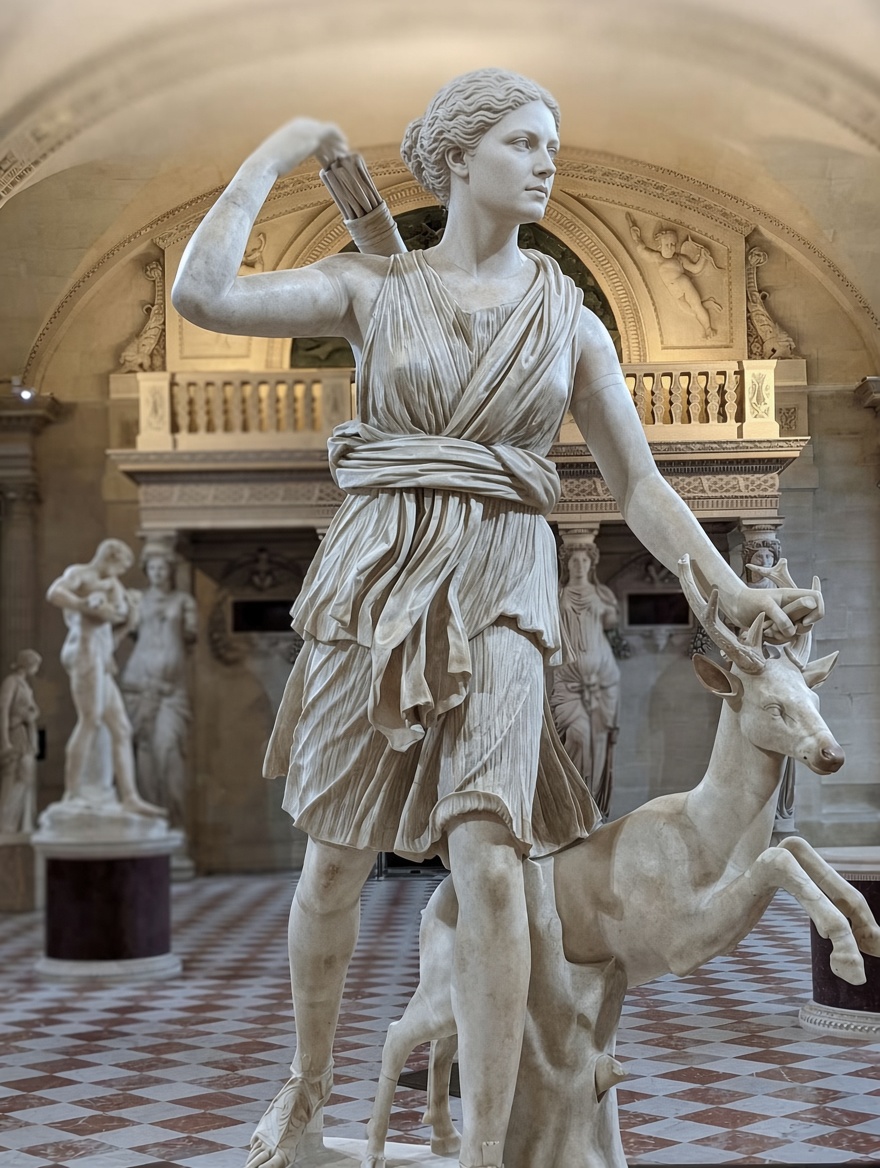
Artemis, twin sister of Apollo, is the maiden huntress of mountains and wild places, mistress of animals and protector of the young and of women in childbirth. At Sparta she was honoured as Orthia beside the Eurotas, at Brauron by Athenian girls who served her as little bears.
Epithets
- Ἀγροτέρα · Agrotera
- the huntress, to whom the Spartans sacrificed a goat before battle (Xenophon, Hellenica 4.2.20)
- Ὀρθία · Orthia
- the upright, of the sanctuary at Sparta (Pausanias 3.16.7–11)
- Πότνια θηρῶν · Potnia Theron
- mistress of animals (Iliad 21.470)
- Ἰοχέαιρα · Iocheaira
- shooter of arrows
- Βραυρωνία · Brauronia
- of Brauron
- Μουνιχία · Mounichia
- of Mounichia in Piraeus
- Φωσφόρος · Phosphoros
- light-bearer
- Λοχία · Lochia
- of childbirth
- Λιμνᾶτις · Limnatis
- of the marsh, on the border of Laconia and Messenia (Pausanias 4.4.2)
Myths
- The maiden's request. As a little girl on her father's knee, Artemis asked Zeus for lasting maidenhood, a bow and arrows and the mountains as her own (Callimachus, Hymn 3.6–25).
- Niobe. When Niobe boasted over Leto, Apollo and Artemis slew her children (Iliad 24.602–617).
- Aktaion. The hunter who saw the goddess bathing was turned into a stag and torn by his own hounds (Apollodorus 3.4.4).
- Iphigenia. At Aulis the fleet was held by the anger of Artemis until Agamemnon's daughter was offered (Euripides, Iphigenia in Aulis).
Cult sites
- Artemis Orthia, Sparta. The sanctuary in the marshy Limnai by the Eurotas, excavated by the British School at Athens in 1906–1910, where thousands of votive lead figurines were found (Pausanias 3.16.7–11).
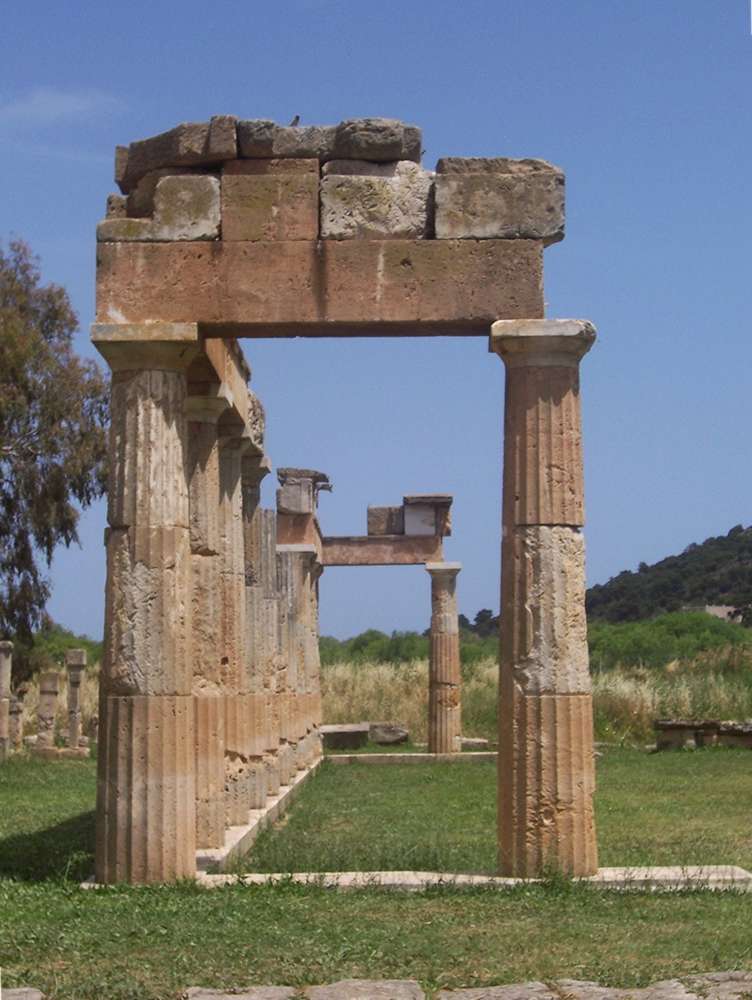
- Brauron. Her sanctuary on the east coast of Attica, where girls served as arktoi, bears.
- Ephesus. The great Artemision, counted among the wonders of the world (Herodotus 1.26; 1.92).
- Delos. Shared with her brother on the island of their birth.
Festivals
- Thank-offering for Marathon. On 6 Boedromion the Athenians sacrificed five hundred goats to Artemis Agrotera, fulfilling their vow at Marathon (Xenophon, Anabasis 3.2.12).
- Mounichia. On 16 Mounichion, with cakes set about with small torches.
- Brauronia. A four-yearly festival of the arkteia at Brauron.
- Orthia at Sparta. Contests of boys at the altar, in later times the endurance trial described by Pausanias 3.16.10 and Plutarch, Lycurgus 18.
Offerings
Goats, deer cakes and the first spoils of the hunt; Xenophon dedicated a tithe of his game and a feast at his sanctuary of Artemis at Skillous (Xenophon, Anabasis 5.3.7–13). Women dedicated garments to Artemis at Brauron after childbirth.
Further epithets
- Ἐφεσία · Ephesia
- of Ephesos, whose temple counted among the seven wonders
Birth and the primary sources
Artemis is the daughter of Zeus and Leto and the twin of Apollo (Theogony 918–920). The Homeric Hymn to Apollo places her birth on Ortygia (3.16), and later sources make her born first and help her mother deliver her brother (Apollodorus 1.4.1). Callimachus tells how as a small girl on her father's knee she asked for eternal maidenhood, as many names as Apollo, a bow and arrows, a short tunic to hunt in, sixty Okeanid nymphs as her chorus and twenty nymphs of Amnisos to keep her hounds, and all the mountains; Zeus laughed and granted all of it, with thirty cities besides (Hymn 3.4–39). The Cyclopes forged her silver bow, and Pan gave her hounds (3.46–97).
The Homeric Hymn 27 sings her in the hunt: over the shadowy hills and windy peaks she draws her golden bow, the mountain tops tremble and the forest cries out with the beasts; then she goes to Delphi and leads the dance of the Muses and Graces (27.1–20). In the Odyssey she slays women with her gentle arrows (Odyssey 11.172–173); in the Iliad she is boxed on the ears by Hera in the battle of the gods (Iliad 21.479–496). With Apollo she shot down the children of Niobe, who boasted of being greater than Leto (Iliad 24.602–609; Ovid, Metamorphoses 6.146–312).
Her purity is fierce. When the hunter Aktaion saw her bathing she turned him into a stag, and his own hounds tore him apart (Callimachus, Hymn 5.107–118; Ovid, Metamorphoses 3.138–252). In Euripides's Hippolytus she is the goddess of the young hunter who honours her alone, and she comes at the end to console him as he dies (Hippolytus 1283–1443). Agamemnon offended her by killing a stag in her grove, and she held the fleet at Aulis until he brought his daughter Iphigeneia to the altar; in Euripides she put a deer in the girl's place and carried her to the Taurians (Iphigenia in Aulis 1578–1595; Iphigenia among the Taurians 26–41). She killed the giant hunter Orion and loved the nymph Kallisto, who broke her vow (Apollodorus 1.4.5; 3.8.2).
Domains and symbols
Artemis rules the wild places, the mountains and forests, the untamed animals and the hunt. She protects the young of every species, girls before marriage, and women in childbirth, and she sends sudden death to women as Apollo does to men. She is the torch-bearer of night and was joined with Selene and Hekate as goddess of the moon. Her emblems are the bow and quiver, the torch and the short hunting tunic. The deer and the hind with golden horns are hers, and the bear of Brauron, the hound, and the wild boar. Her plants are the cypress, the walnut, the myrtle and the wormwood, artemisia, named after her.
Sanctuaries and cults
- Brauron. Her sanctuary on the east coast of Attica, where Athenian girls served as "little bears", arktoi, before marriage, and Iphigeneia's tomb was shown (Euripides, Iphigenia among the Taurians 1462–1467).
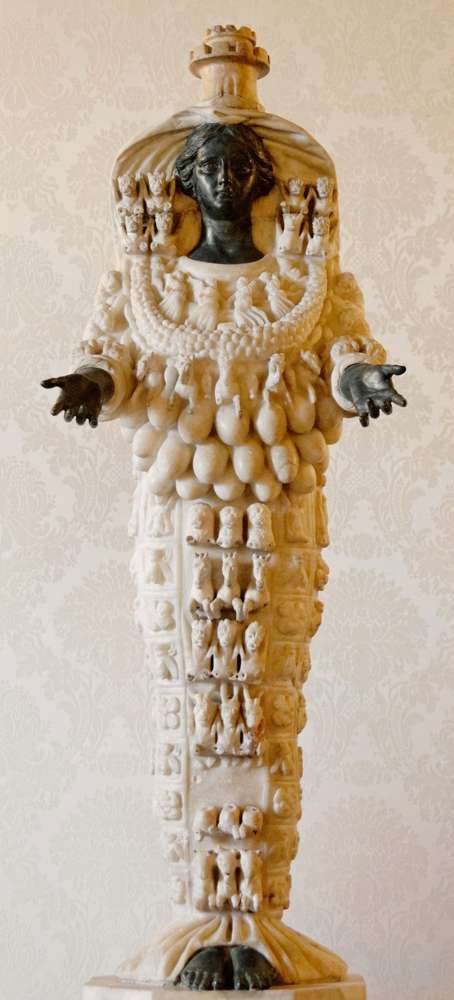
- Ephesos. The Artemision, rebuilt after the fire of 356 BC and ranked among the wonders of the world; the goddess there was the many-breasted Ephesia.
- Sparta. The sanctuary of Artemis Orthia by the Eurotas, where Spartan boys endured the ordeal at her altar (Pausanias 3.16.10–11).
- Mounychia and Agrai. Her temples at Peiraieus and on the Ilissos at Athens.
- Aulis. Her temple at the harbour where the fleet waited (Pausanias 9.19.6).
At Athens her festivals fell through the year. The Elaphebolia, the deer-shooting, gave its name to the month Elaphebolion, with cakes shaped as stags. The Mounychia on 16 Mounychion brought amphiphontes, cakes lit with small torches, to her temple at Peiraieus. On 6 Boedromion the polemarch sacrificed five hundred goats to Artemis Agrotera, the vow made before Marathon (Xenophon, Anabasis 3.2.12). The Brauronia was held every fourth year, with a procession from Athens.
Statues and art
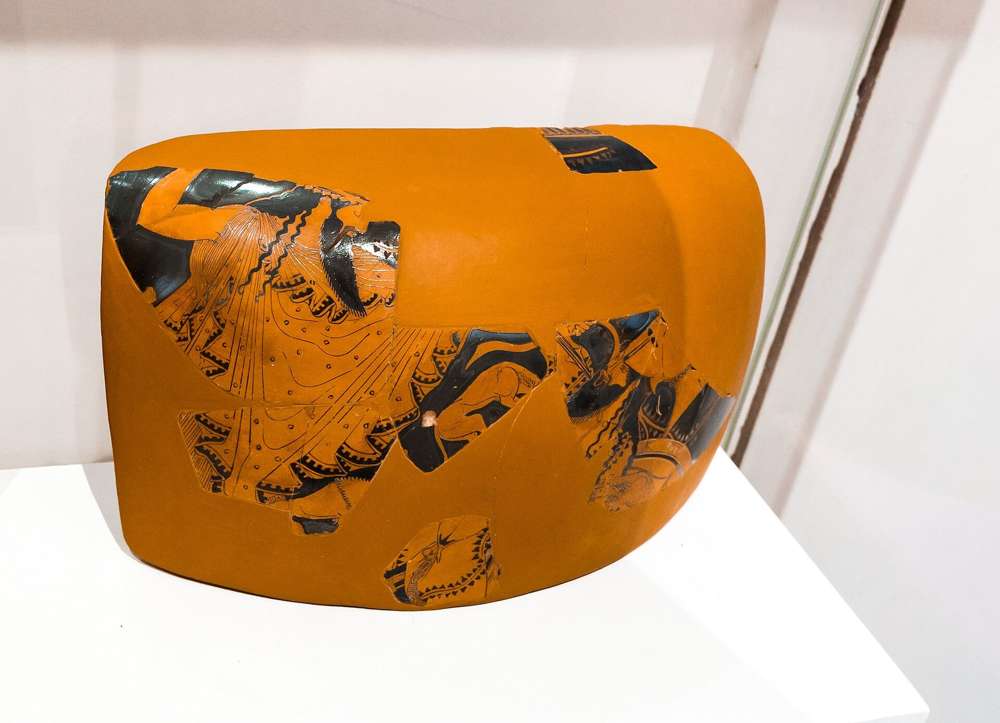
The Artemis of Versailles, shown above, strides out drawing an arrow, a deer beside her. The Artemis of Gabii in the Louvre, after Praxiteles, fastens her cloak at the shoulder; Pausanias records an image by Praxiteles at Brauron itself (1.23.7). The Artemis Ephesia of the Capitoline Museums shows the Ephesian goddess, her chest covered with rows of rounded forms and her skirt with animals. On a krater of about 470 BC the Pan Painter shows her shooting down Aktaion as his hounds attack him. Titian's Diana and Actaeon renewed the subject in the Renaissance.
Beneath the Divine Mind
Artemis is the Divine Mind as purity and guardianship of the untouched: its wildness that no order can tame and its protection of what is young and new, fractured off, personified and deified as the virgin huntress. Twin of Apollo's light, she is Mind's light by night. She stands beneath the One, as The One and the Many sets out. She still acts in human affairs wherever wild land is kept, a child is safely born, or a young person grows strong before taking up the duties of adulthood.
Honouring Artemis today
- In the wild. Her best altar is a spring or a tree in the forest. Leave offerings of water, honey and cakes on a stone, and take nothing away.
- Offerings. Moon-shaped cakes with small candles, as at the Mounychia; a sprig of cypress or wormwood; and incense.
- Childbirth and childhood. Pray to Artemis Locheia before a birth and dedicate a child's first garment or toy to her afterwards.
- The months. Keep the Elaphebolia on 6 Elaphebolion, the Mounychia on 16 Mounychion, and the vow of Agrotera on 6 Boedromion. Monday, the day of the Moon, suits her.
- Hymn. Recite the Homeric Hymn above or Homeric Hymn 27.
Hymn
Muse, sing of Artemis, sister of the Far-shooter, the virgin who delights in arrows, who was fostered with Apollo. She waters her horses from Meles deep in reeds, and swiftly drives her all-golden chariot through Smyrna to vine-clad Claros where Apollo, god of the silver bow, sits waiting for the far-shooting goddess who delights in arrows.Homeric Hymn 9, To Artemis. Homeric Hymns, tr. H. G. Evelyn-White (1914), public domain.
Images
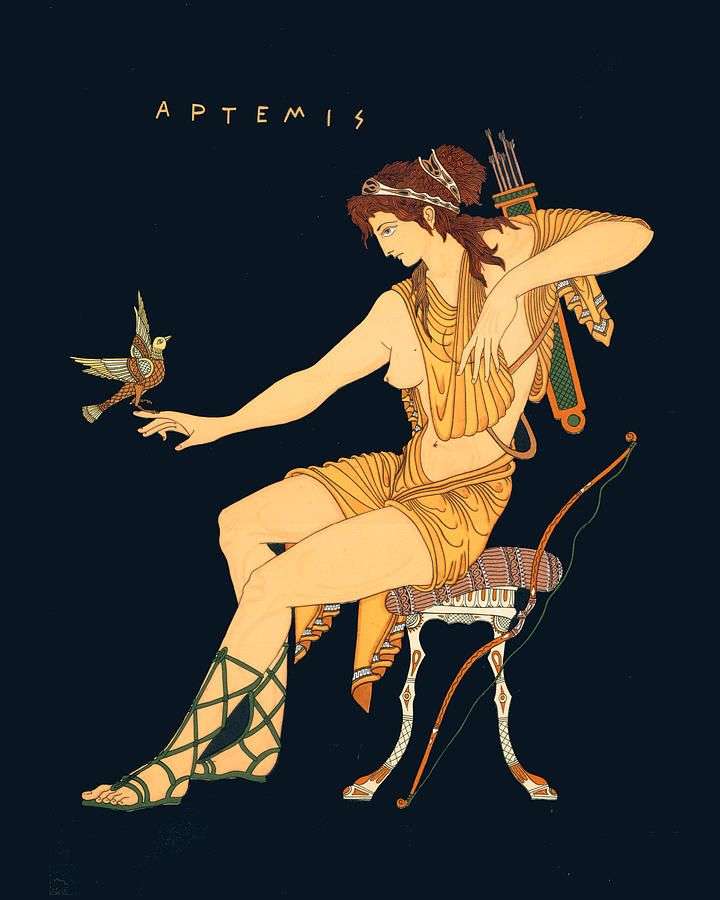

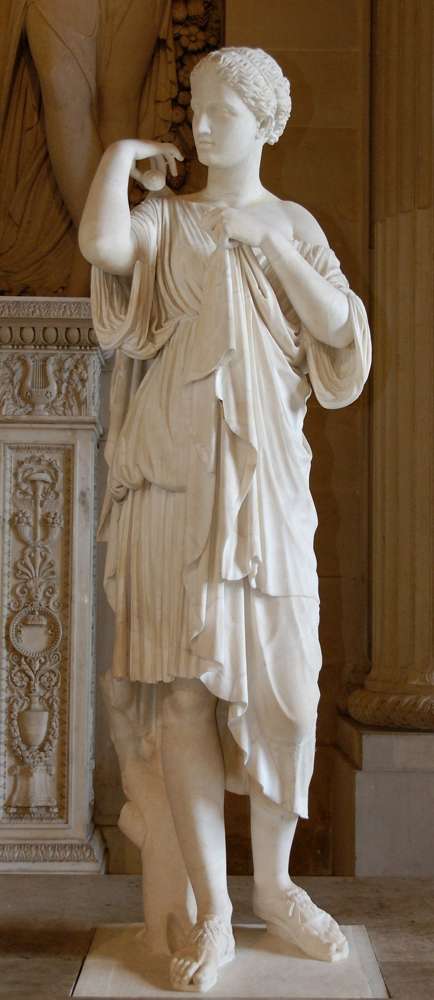
Marie-Lan Nguyen, CC BY 2.5, via Wikimedia Commons

Marie-Lan Nguyen, Public domain, via Wikimedia Commons

Carole Raddato from FRANKFURT, Germany, CC BY-SA 2.0, via Wikimedia Commons

ArchaiOptix, CC BY-SA 4.0, via Wikimedia Commons

Sources
Homeric Hymns 3 and 27; Homer, Iliad 21 and 24, and Odyssey 11; Hesiod, Theogony; Callimachus, Hymns 3 and 5; Euripides, Hippolytus, Iphigenia in Aulis and Iphigenia among the Taurians; Xenophon, Anabasis 3; Apollodorus, Library 1 and 3; Ovid, Metamorphoses 3 and 6; Pausanias 1.23, 3.16 and 9.19.
Quotations in public-domain translations (Evelyn-White 1914, Butler 1898/1900, Taylor 1792); other authors paraphrased.