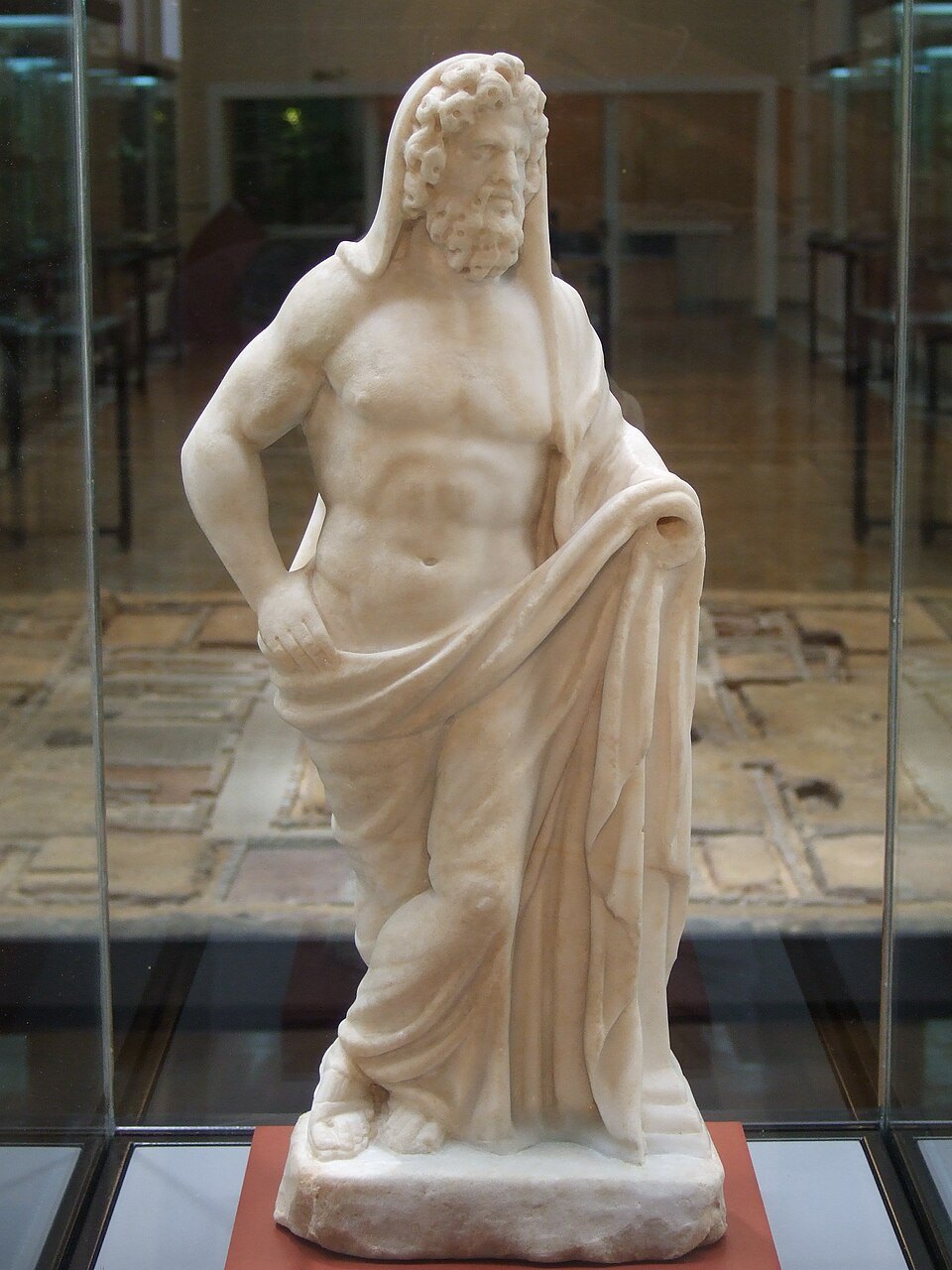
Ecelan, CC BY-SA 4.0, via Wikimedia Commons

Kronos, “the wily, youngest and most terrible” of the children of Ouranos and Gaia, cut down his father with the sickle his mother made and ruled the world (Theogony 137–138, 154–182). Warned that a son would overthrow him, he swallowed his children as they were born, until Rhea gave him a stone in place of Zeus. Defeated in the war of the Titans, he was confined below. Yet the poets also remember his reign as the golden age, when men “lived like gods without sorrow of heart” (Works and Days 109–112).
Epithets
- Ἀγκυλομήτης · Ankylometes
- of crooked counsel (Theogony 137, 168)
Domains and symbols
Time as the harvest of all things; the reaper; the old order that gives way to the new; the golden age. Admire: patience, the ripening of things in season. Sacred symbols: the sickle, the swaddled stone, the harvest.
Myths
- The sickle. Gaia made a great sickle of grey adamant; Kronos waited in ambush and cut off his father’s members (Theogony 159–182).
- The children swallowed. He swallowed Hestia, Demeter, Hera, Hades and Poseidon; Rhea bore Zeus in Crete and gave Kronos a stone in swaddling clothes (Theogony 453–491). Zeus set that stone at Pytho (Theogony 497–500), where it was anointed every day (Pausanias 10.24.6).
- The golden race. Under Kronos the first race of men lived without toil or old age (Works and Days 109–120).
- The tower of Kronos. The just dwell after death in the Isles of the Blessed, by the tower of Kronos (Pindar, Olympian 2.68–77).
Cult sites
- Olympia. The Hill of Kronos above the Altis, where the priests called Basilai sacrificed to him at the spring equinox (Pausanias 6.20.1).
- Athens. A temple of Kronos and Rhea in the precinct of Olympian Zeus (Pausanias 1.18.7).
Festivals
- Kronia. On 12 Hekatombaion, a harvest feast at which masters dined with their slaves (Philochoros, quoted by Macrobius, Saturnalia 1.10.22). Rome kept the same spirit at the Saturnalia.
Offerings
Harvest cakes and first fruits at the Kronia; a shared meal at which everyone sits as equals. Today: keep the Kronia with a feast in midsummer.
Beneath the Divine Mind
Kronos is the Divine Mind itself in the old reading of the Platonists: Plotinus took the line of Ouranos, Kronos and Zeus as the One, Intellect and Soul, and called Kronos the Intellect “full” of its offspring (Enneads V.1.7; V.8.12–13). Like every god he stands beneath the One (The One and the Many).
Honouring Kronos today
- Altar. A sickle or harvest knife, a stone, ears of grain.
- Offerings. First fruits, bread and wine.
- The month. Keep the Kronia on 12 Hekatombaion.
- Hymn. Recite the Orphic hymn below.
Hymn
Etherial father, mighty Titan, hear, great fire of Gods and men, whom all revere: endu’d with various council, pure and strong, to whom perfection and decrease belong.Orphic Hymn 13, To Kronos, 1–4. Tr. Thomas Taylor (1792), public domain; divine names as given on Hemera.
Images
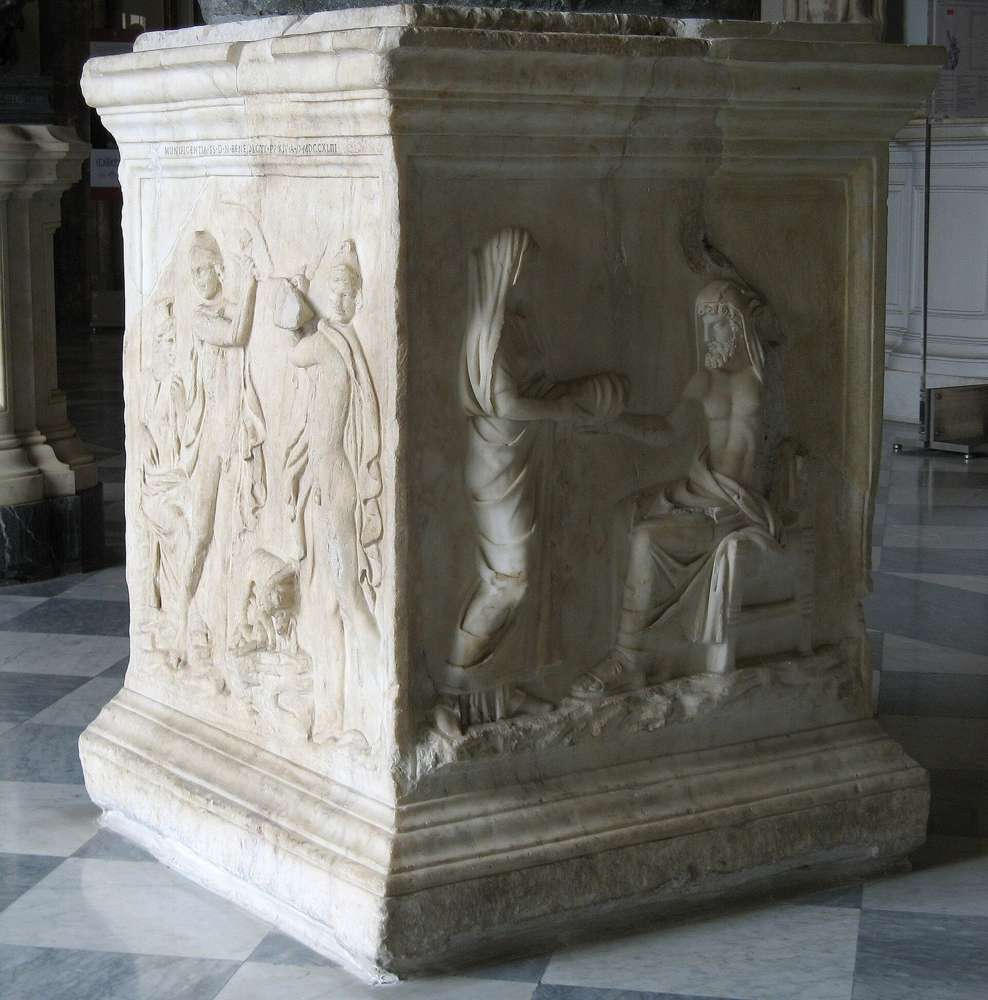
Mark Landon, CC BY 4.0, via Wikimedia Commons

Sources
Hesiod, Theogony 137–182, 453–506; Works and Days 109–120; Pindar, Olympian 2.68–77; Orphic Hymn 13; Plotinus, Enneads V.1.7 and V.8.12–13; Pausanias 1.18.7, 6.20.1 and 10.24.6; Macrobius, Saturnalia 1.10.22.
Quotations in public-domain translations (Evelyn-White 1914, Butler 1898/1900, Taylor 1792); other authors paraphrased.