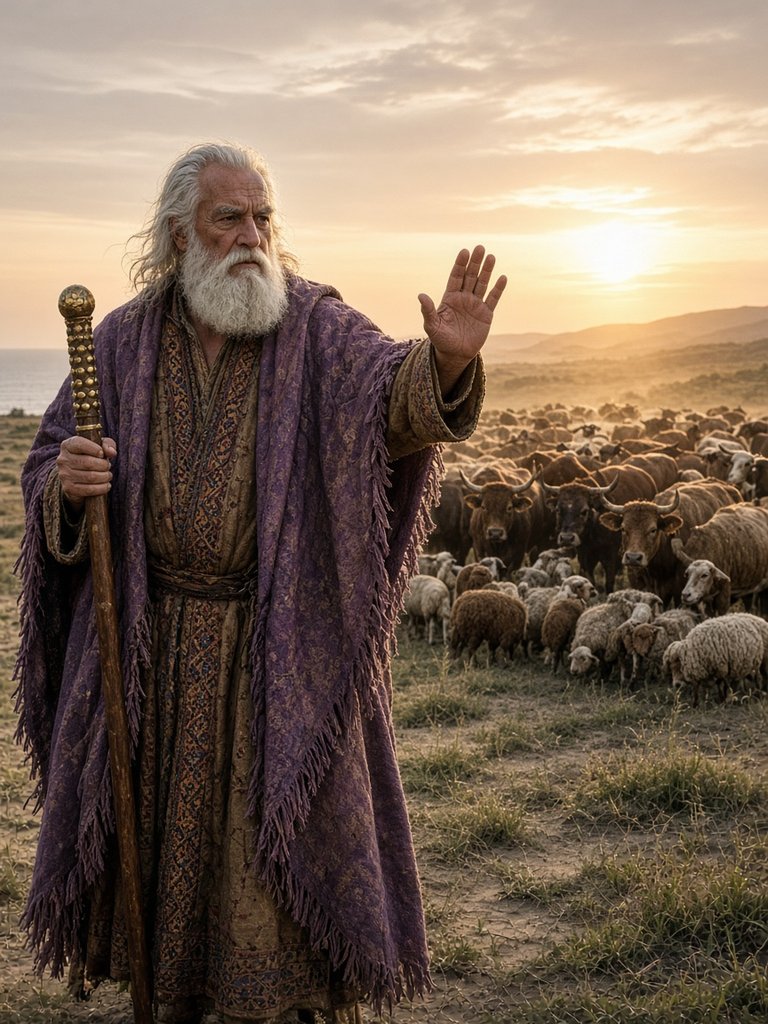
Neleus is a son of Poseidon and Tyro, twin of Pelias. Driven from Iolkos by his brother, he founded the kingdom of Pylos in Messenia and married Chloris of Orchomenos (Odyssey 11.254–257, 11.281–286, paraphrased). The Odyssey calls Pylos “the city of Neleus” (Odyssey 3.4).
He was a hard and grasping king. He seized the goods of Melampous and held them a year, and he would give his daughter Pero only to the man who brought him the cattle of Iphiklos (Odyssey 11.287–297, 15.225–238, paraphrased).
When Herakles attacked Pylos he killed all the sons of Neleus but one, as old Nestor remembers: “in former years Hercules had come, and had laid his hand heavy upon us, so that all our best men had perished. Neleus had had twelve sons, but I alone was left; the others had all been killed” (Iliad 11.690–693, tr. Butler). Pausanias was shown his tomb at Corinth, kept secret by Sisyphos (2.2.2, paraphrased).
Epithets
- Ποσειδάωνος υἱός · Poseidaōnos huios
- son of Poseidon
- ἀγέρωχος · agerōchos
- proud, lordly
Symbols and virtues
Kingship founded in exile, pride and loss. Symbols: the herds of Pylos, the sceptre.
Myths
- Twin of Pelias. Odyssey 11.254–257.
- Pero and Melampous. Odyssey 11.287–297.
- Herakles at Pylos. Iliad 11.690–693.
Cult and places
- Corinth. Grave said to be on the Isthmus (Pausanias 2.2.2).
In the poets
“Neleus had had twelve sons, but I alone was left; the others had all been killed.”Homer, Iliad 11.692–693, tr. Samuel Butler (1898), public domain.
Sources
Homer, Iliad 11.682–761; Odyssey 3.4, 11.254–297, 15.225–238; Apollodorus 1.9.8–9; Pausanias 2.2.2.
Quotations in public-domain translations (Evelyn-White 1914, Butler 1898/1900, Taylor 1792); other authors paraphrased.