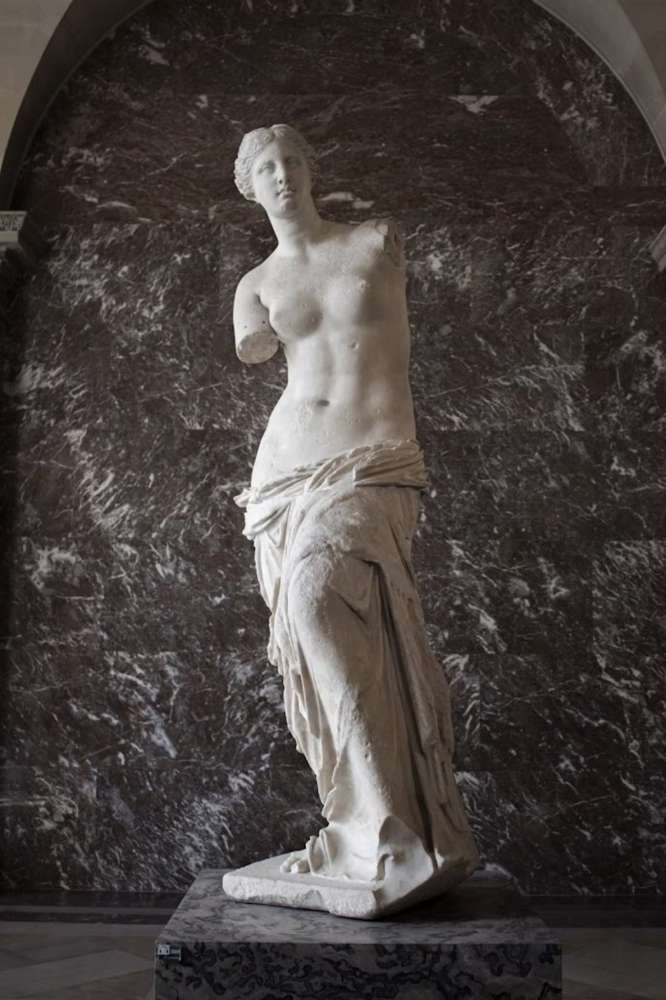
Aphrodite is the goddess of love, beauty and desire. Hesiod tells that she was born from the foam of the sea off Kythera and came ashore at Cyprus; Homer makes her the daughter of Zeus and Dione. Sailors honoured her as the goddess of fair voyages, and at Sparta she was even shown armed.
Epithets
- Οὐρανία · Ourania
- heavenly
- Πάνδημος · Pandemos
- of all the people, honoured in Athens (Pausanias 1.22.3)
- Κυθέρεια · Kythereia
- of Kythera
- Κύπρις · Kypris
- the Cyprian
- Φιλομμειδής · Philommeides
- laughter-loving
- Εὔπλοια · Euploia
- of fair voyages, at Knidos (Pausanias 1.1.3)
- Ἀρεία · Areia
- the armed, at Sparta (Pausanias 3.17.5)
- Μορφώ · Morpho
- of shapeliness, at Sparta (Pausanias 3.15.10–11)
Myths
- Birth from the foam. From the foam of the sea she rose and came first to Kythera, then to sea-girt Cyprus (Hesiod, Theogony 188–206).
- Anchises. Zeus made Aphrodite herself feel desire for the mortal Anchises on Mount Ida; their son was Aeneas (Homeric Hymn 5).
- The judgement of Paris. Paris judged her fairest, and she gave him Helen (Iliad 24.25–30).
- The net of Hephaistos. Caught with Ares, she fled to her precinct and altar at Paphos (Odyssey 8.360–366).
Cult sites
- Paphos. Her ancient sanctuary in Cyprus (Odyssey 8.362–363).
- Kythera. Her island, with a sanctuary said to be among the oldest of the Greeks (Herodotus 1.105; Pausanias 3.23.1).
- Knidos. Famous for the statue by Praxiteles (Pliny, Natural History 36.20).
- Corinth. Her temple on Acrocorinth (Pausanias 2.5.1).
Festivals
- Aphrodisia. Festivals in her honour in many cities, notably Corinth and Cyprus.
- Pandemos procession. In Athens on 4 Hekatombaion the shrine of Aphrodite Pandemos was purified and a procession held (IG II² 659).
- Adonia. Midsummer rites of women on the rooftops for Adonis (Aristophanes, Lysistrata 387–398).
Offerings
Incense, flowers, doves and honey cakes; the fourth day of each month was held sacred to her and to Eros.
Further epithets
- Ἀναδυομένη · Anadyomene
- rising from the sea, the subject of Apelles's painting
- Ἐν κήποις · en Kepois
- in the Gardens, on the Ilissos (Pausanias 1.19.2)
Birth and the primary sources
Two births are told. Hesiod says she rose from the white foam, aphros, that gathered around the severed parts of Ouranos where they fell into the sea, and came ashore first at Kythera and then at Cyprus; Eros and Himeros attended her from her birth (Theogony 188–202). That story is told more fully on the Theogony page. Homer makes her the daughter of Zeus and Dione (Iliad 5.370–372). Plato's Pausanias distinguishes the two: the heavenly Aphrodite Ourania, motherless daughter of Ouranos, and the common Aphrodite Pandemos, daughter of Zeus and Dione (Symposium 180d–e).
Homeric Hymn 6 tells how the moist breath of Zephyros carried her over the sea to Cyprus, where the gold-crowned Horai dressed her in immortal clothes, a crown of gold, earrings of orichalc and golden necklaces, and brought her to the gods, each of whom wished to take her as his wife (6.1–18). The long Homeric Hymn to Aphrodite says only three hearts are proof against her: Athena, Artemis and Hestia (5.7–33). To humble her, Zeus filled her with desire for the Trojan Anchises; she came to him on Mount Ida disguised as a mortal girl, with wolves, lions, bears and leopards fawning around her, and lay with him, then revealed herself and foretold the birth of Aeneas (5.45–291).
In the Iliad she wins the golden apple at the Judgement of Paris and protects her favourites. She snatches Paris from his duel with Menelaos and wraps him in mist (Iliad 3.373–382), compels Helen to his bed (3.383–420), and is wounded on the hand by Diomedes while rescuing Aeneas, so that she flees weeping to Dione (5.311–430). She lends Hera her embroidered band, in which are love, desire and the whispered persuasion that steals the wits even of the wise (14.214–217). Sappho calls on her as "deathless Aphrodite of the ornate throne, daughter of Zeus, weaver of wiles", who comes down in a chariot drawn by sparrows (fr. 1). Ovid tells her love for Adonis, killed by the boar, from whose blood she raised the anemone (Metamorphoses 10.503–739), and Apuleius the trials she set for Psyche (Metamorphoses 4–6).
Domains and symbols
Aphrodite is the goddess of love and desire, of beauty and grace, of sexual union and the fertility that follows it, and of the persuasion and charm that draw beings together. As Ourania she is heavenly love; as Pandemos, the love that binds the citizens; as Euploia, the calm sea. Her companions are Eros and Himeros, Peitho, the Charites and the Horai. Her birds are the dove and the sparrow; the swan and the goose carry her through the air. The myrtle, the rose, the apple and the anemone are hers, and the scallop shell recalls her birth from the sea.
Sanctuaries and cults
- Paphos. Her oldest and holiest sanctuary, on Cyprus, where her fragrant altar stood (Odyssey 8.362–363; Hymn 5.58–59) and the goddess was shown as a conical stone.
- Kythera. Her ancient temple of Aphrodite Ourania on the island, which Pausanias calls the most holy of all her sanctuaries in Greece (3.23.1).
- Acrocorinth. Her temple on the citadel above Corinth (Pausanias 2.5.1; Strabo 8.6.20).
- Knidos. Her round temple held the naked Aphrodite of Praxiteles.
- Athens. She had shrines as Pandemos at the foot of the Acropolis, as Ourania in the Agora, and in the Gardens on the Ilissos.
Athens held the Aphrodisia, and on 4 Hekatombaion the shrine of Aphrodite Pandemos was purified with the blood of a dove. The fourth day of every month was sacred to her and to Eros. In the summer women held the Adonia on the rooftops, sowing quick-growing "gardens of Adonis" in pots and mourning the young god.
Statues and art
Praxiteles carved the Aphrodite of Knidos, about 350 BC, the first fully naked statue of the goddess, which Pliny ranked above every work in the world (Natural History 36.20–21); Roman copies survive, among them the Knidia in the Palazzo Altemps. Apelles painted her rising from the sea, the Anadyomene. The relief of the Ludovisi Throne, about 460 BC, shows her lifted from the waves by two Horai. The Aphrodite of Melos in the Louvre, shown above, is a Hellenistic original. From Delos comes the playful group of Aphrodite raising her sandal against Pan, with Eros between them, about 100 BC. Botticelli's Birth of Venus, about 1485, follows Hesiod and the Homeric Hymn.
Beneath the Divine Mind
Aphrodite is the Divine Mind as beauty and attraction: its power to draw the many toward union and toward itself, fractured off, personified and deified as the goddess born from the sea. Plato's Diotima teaches that love of beauty leads upward from bodies to souls to Beauty itself (Symposium 210a–212a), which is the ascent of Ourania. She stands beneath the One, as The One and the Many sets out. She still acts in human affairs wherever two people are drawn together, a quarrel is reconciled, or beauty turns a mind upward.
Honouring Aphrodite today
- Offerings. Roses, myrtle, apples, honey, perfume and frankincense; a dove figure or a shell on the altar.
- The fourth day. Keep the fourth day of each lunar month for Aphrodite and Eros, and Friday, her day in the planetary week.
- Love and reconciliation. Pray to Aphrodite before courtship, at a wedding with Hera, and for reconciliation between friends.
- The months. Purify her shrine on 4 Hekatombaion; keep the Adonia in summer with a pot of quick-sprouting seeds.
- Hymn. Recite the Homeric Hymn above, Homeric Hymn 6, or Sappho's prayer.
Hymn
Of Cytherea, born in Cyprus, I will sing. She gives kindly gifts to men: smiles are ever on her lovely face, and lovely is the brightness that plays over it. Hail, goddess, queen of well-built Salamis and sea-girt Cyprus; grant me a cheerful song.Homeric Hymn 10, To Aphrodite. Homeric Hymns, tr. H. G. Evelyn-White (1914), public domain.
Images

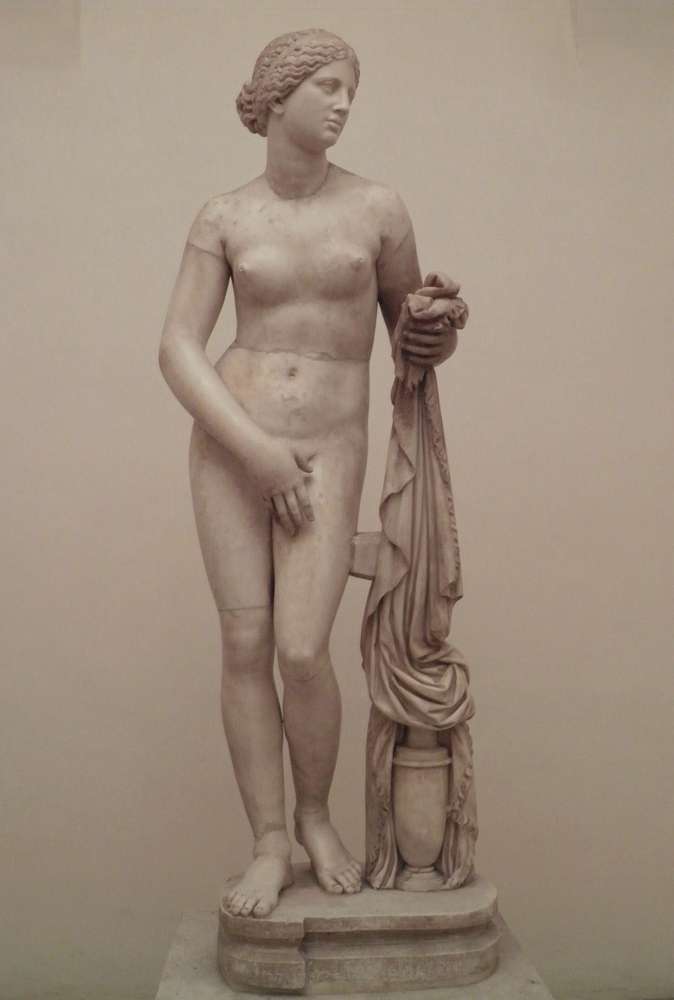
Carole Raddato from FRANKFURT, Germany, CC BY-SA 2.0, via Wikimedia Commons

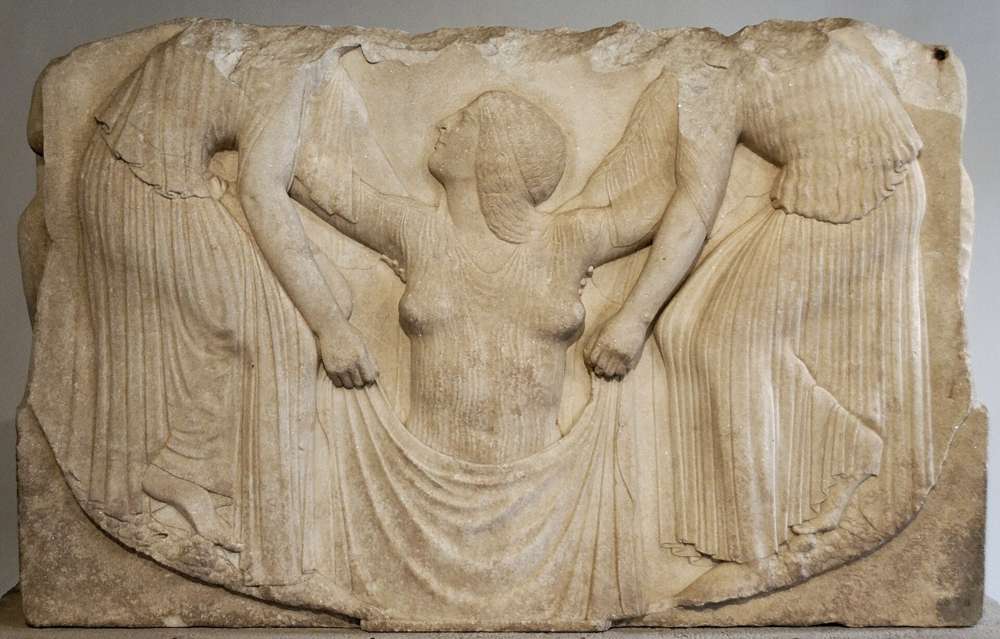
Marie-Lan Nguyen, Public domain, via Wikimedia Commons

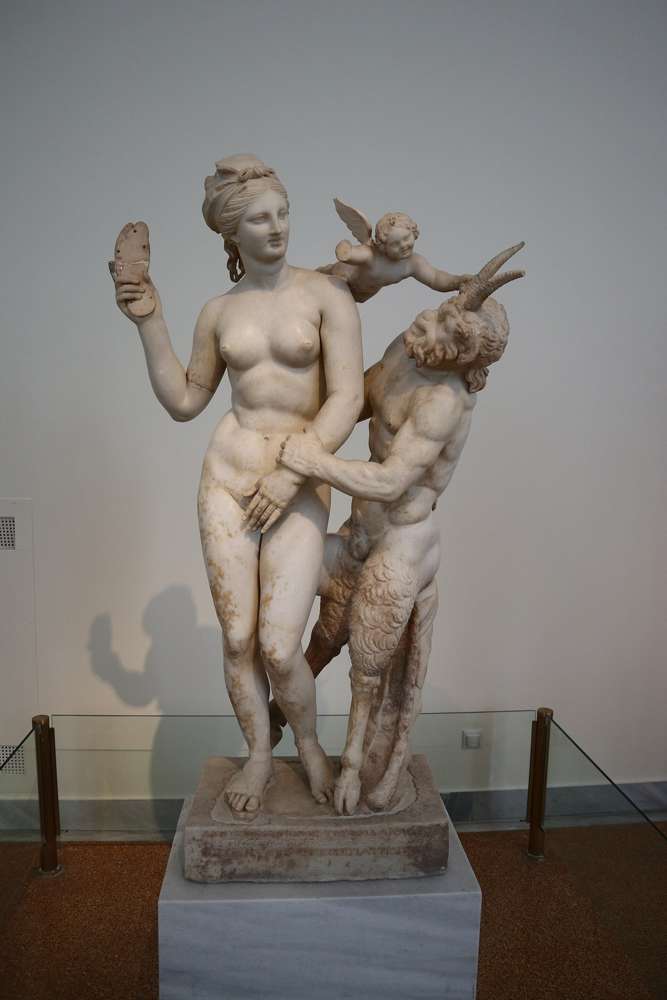
George E. Koronaios, CC0, via Wikimedia Commons

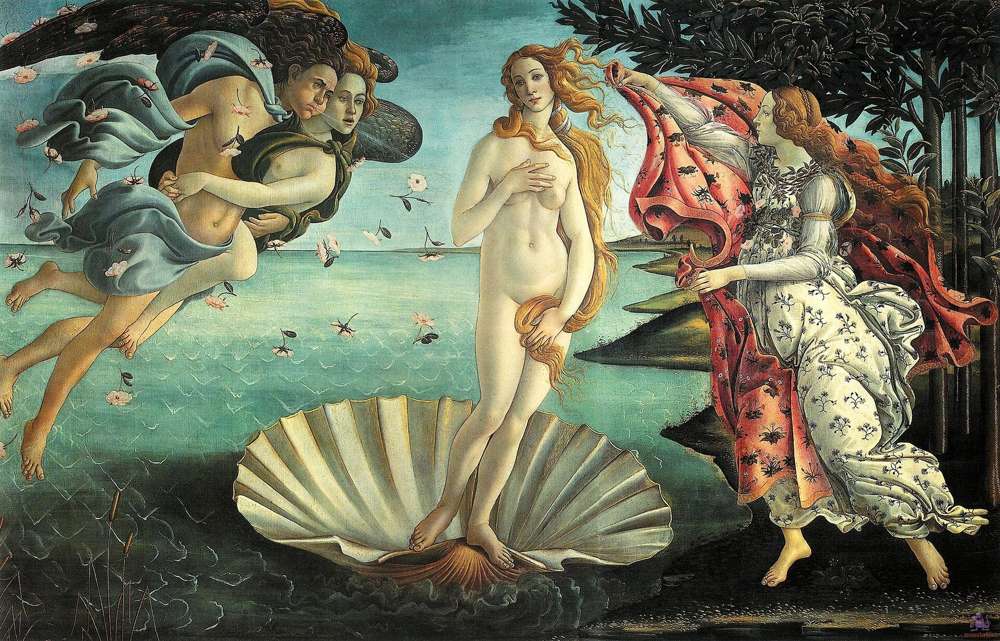
Sandro Botticelli (painting), Public domain, via Wikimedia Commons

Sources
Hesiod, Theogony; Homer, Iliad 3, 5 and 14, and Odyssey 8; Homeric Hymns 5, 6 and 10; Sappho fr. 1; Plato, Symposium; Pliny, Natural History 36; Strabo 8.6; Ovid, Metamorphoses 10; Apuleius, Metamorphoses 4–6; Pausanias 1.19, 1.22, 2.5, 3.17 and 3.23.
Quotations in public-domain translations (Evelyn-White 1914, Butler 1898/1900, Taylor 1792); other authors paraphrased.