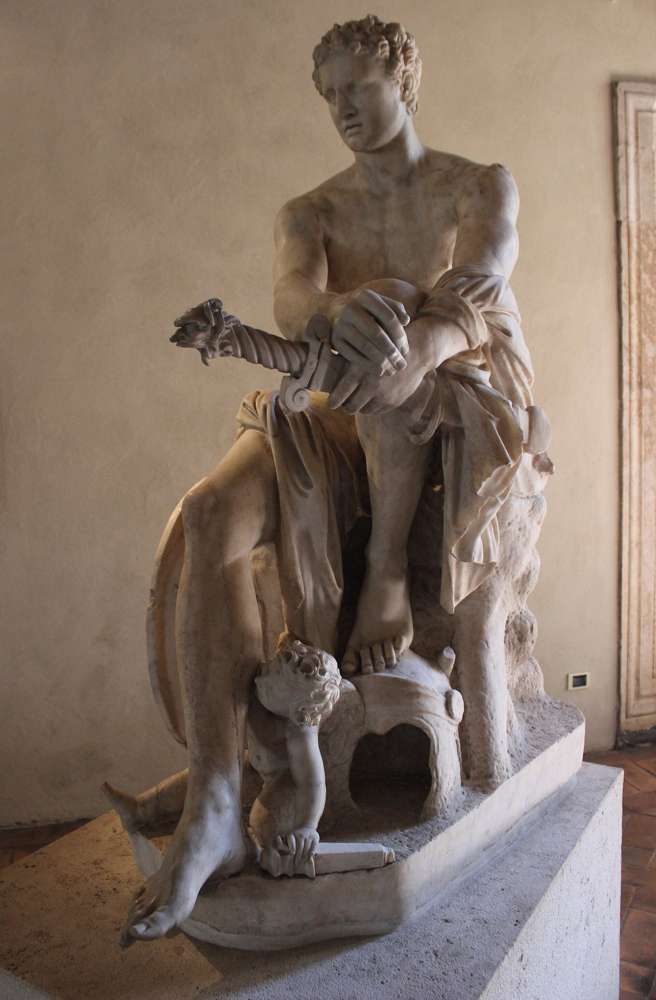
Ares, son of Zeus and Hera, is the god of war in its raw force and of the courage it demands. Homer's gods find him hard to love, but the Spartans and the Athenian ephebes swore by him, and the Areopagus, the hill of Ares, gave its name to the oldest court of Athens.
Epithets
- Ἐνυάλιος · Enyalios
- the warlike, a name often used of him and invoked by the ephebes
- Ἄρειος · Areios
- martial
- Θηρίτας · Theritas
- his title at a temple on the road from Sparta to Therapne (Pausanias 3.19.7–8)
- Γυναικοθοίνας · Gynaikothoinas
- feasted by women, at Tegea (Pausanias 8.48.4–5)
- Βροτολοιγός · Brotoloigos
- bane of mortals, a Homeric epithet
Myths
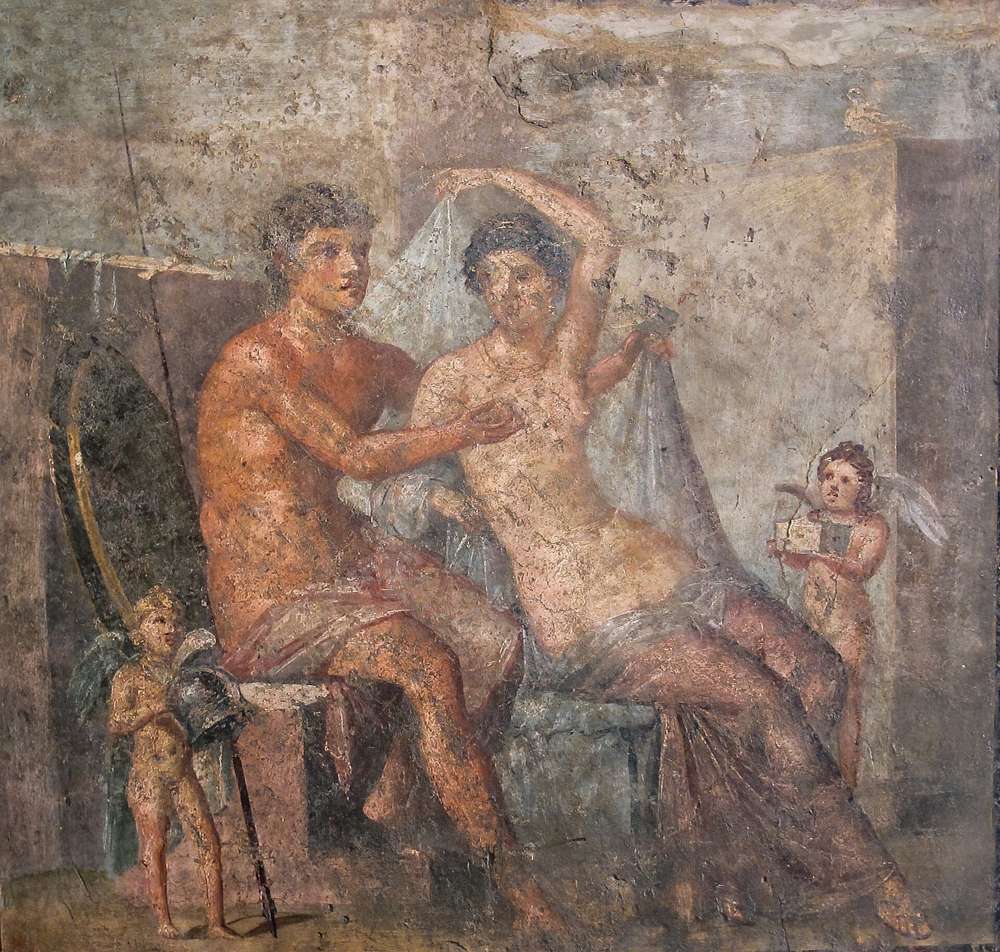
- Ares and Aphrodite. Hephaistos caught Ares and Aphrodite in a net of fine chains, and the gods laughed (Odyssey 8.266–366).
- Wounded at Troy. Diomedes, aided by Athena, wounded Ares, who bellowed like ten thousand men (Iliad 5.855–863).
- The first trial. Ares was tried on the Areopagus for killing Halirrhothios, son of Poseidon, and acquitted (Pausanias 1.21.4; Apollodorus 3.14.2).
- The dragon of Thebes. Kadmos slew the serpent of Ares at the spring and married Harmonia, daughter of Ares and Aphrodite (Apollodorus 3.4.1–2).
Cult sites
- Athenian Agora. A temple of Ares stood in the Agora, re-erected there in Roman times (Pausanias 1.8.4).
- Sparta. An ancient statue of Enyalios in fetters, so that the war-god should never leave the city (Pausanias 3.15.7).
- Therapne road. The temple of Ares Theritas near Sparta (Pausanias 3.19.7–8).
- The Phoibaion. Spartan young men sacrificed a puppy to Enyalios at night before their mock battle (Pausanias 3.14.9).
Festivals
- Ephebic oath. Young Athenians swore by Enyalios, Ares and Athena Areia (the oath stele from Acharnai, fourth century BC).
- Spartan night sacrifice. At the Phoibaion before the contest of the young men (Pausanias 3.14.9).
Offerings
Before battle Spartan kings sacrificed to the Muses and to Artemis Agrotera, and to Enyalios the young men offered puppies (Plutarch, Lycurgus 21–22; Pausanias 3.14.9). Today his worshippers honour him with courage, discipline and care for those who serve.
Further epithets
- Ἀνδρειφόντης · Andreiphontes
- slayer of men (Iliad 2.651)
- Θοῦρος · Thouros
- the rushing, the impetuous (Iliad 5.30)
- Χαλκεός · Chalkeos
- bronze-armoured (Iliad 5.704)
- Ἀφνειός · Aphneios
- the abundant, at Tegea, where he fed his son from his dead mother's breast (Pausanias 8.44.7–8)
Birth and the primary sources
Ares is the son of Zeus and Hera (Theogony 921–923; Iliad 5.892–896), brother of Hebe and Eileithyia. His lineage within the house of Kronos is on the Theogony page. His companions in battle are Eris, Strife, his sister; Enyo, the sacker of cities; and his sons by Aphrodite, Deimos and Phobos, Fear and Rout, who yoke his horses (Iliad 4.440–441; 15.119–120; Theogony 933–937). His other children by Aphrodite are Harmonia, wife of Kadmos, and in later poets Eros and Anteros.
Homer shows him in the full fury of war. He fights for the Trojans and is wounded by Diomedes with Athena's help; he bellows as loud as nine or ten thousand warriors and rushes up to Olympus to show Zeus his immortal blood. Zeus calls him "the most hateful to me of all the gods on Olympus, for strife is always dear to you" and has Paiéon heal him (Iliad 5.855–906). Later Athena strikes him down with a boundary stone, and he lies covering seven acres (21.391–408). In the Odyssey the bard Demodokos sings how Hephaistos caught Ares and Aphrodite in a net of chains in their bed and called the gods to laugh at them (Odyssey 8.266–366).
The Homeric Hymn to Ares, an Orphic and late poem, turns him into a power of courage and restraint: "shed down a kindly ray from above upon my life and strength of war, that I may drive away bitter cowardice … and keep back the shrill fury of my heart" (Hymn 8.9–15). Apollodorus tells how the Aloadai, the giants Otos and Ephialtes, bound him in a bronze jar for thirteen months until Hermes stole him out (Iliad 5.385–391; Library 1.7.4). Ares killed Halirrhothios, son of Poseidon, for violating his daughter Alkippe, and was tried by the gods on the hill thereafter called the Areopagus, the Hill of Ares, the first court for homicide (Apollodorus 3.14.2; Pausanias 1.28.5). Aeschylus's Seven against Thebes and Sophocles's Antigone sing him as the god who rages around the city walls. The serpent that guarded his spring at Thebes was killed by Kadmos, and from its teeth sprang the armed Spartoi (Euripides, Phoenician Women 657–675).
Domains and symbols
Ares is the god of battle itself: the onset, the clash of shields, courage and slaughter. Where Athena is war's strategy, Ares is its raw force and its daring. He is also the protector of a city's walls and the avenger of wrongs, and for the Spartans the first virtue of men. His arms are helmet, spear and shield; he drives a four-horse chariot with Phobos and Deimos. His animals are the dog and the vulture, and the serpent of Thebes; the woodpecker was sacred to his Roman counterpart Mars. Thrace was his home (Iliad 13.301; Odyssey 8.361).
Sanctuaries and cults
- The Temple of Ares in the Agora. A Doric temple of the fifth century, moved stone by stone from Pallene and rebuilt in the Athenian Agora under Augustus; Pausanias saw in it statues of Ares by Alkamenes and of Athena and Aphrodite (1.8.4).
- The Areopagus. The hill of the ancient homicide court beside the Acropolis, named for his trial.
- Sparta. The ephebes sacrificed to Enyalios before the ritual battle at Platanistas, and the ancient image of Enyalios stood in chains so that the god would never leave the city (Pausanias 3.14.9–10; 3.15.7).
- Acharnai. In Attica his altar received the oath of the Athenian ephebes, who swore by Enyalios and Ares among the witnesses.
- Geronthrai and Tegea. In Laconia a temple and grove of Ares held a yearly festival from which women were barred (Pausanias 3.22.6–7); in Tegea his festival was the women's.
Athens gave Ares no month of his own, but its soldiers sacrificed to him and to Enyalios before battle. The month Boedromion, named from Apollo Boedromios, "the runner to the battle cry", held the Charisteria for the victory at Marathon on the 6th.
Statues and art
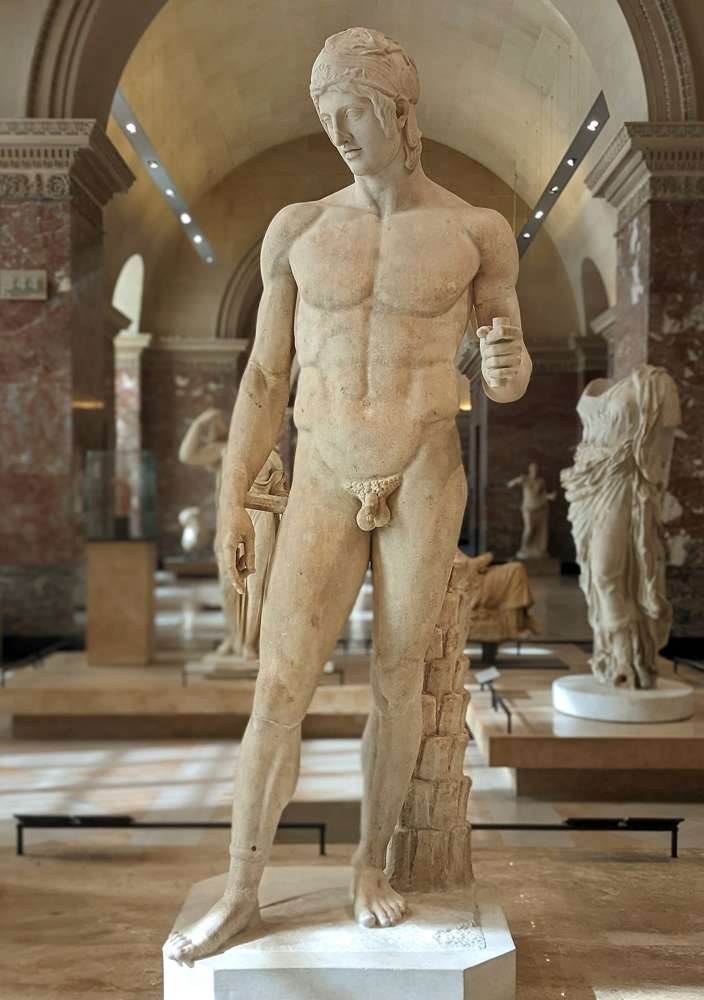
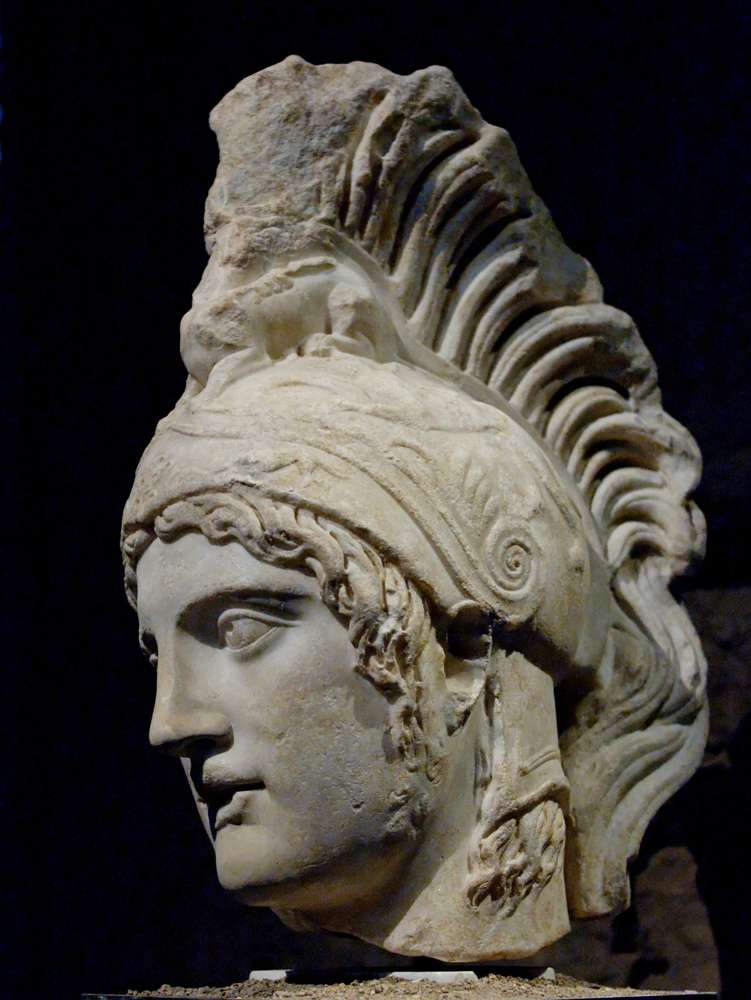
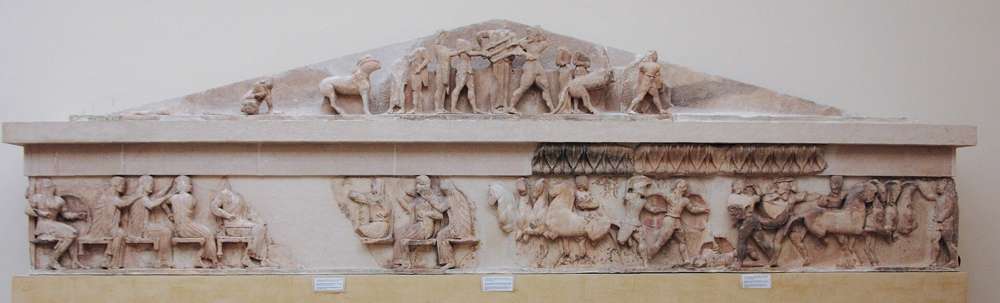
Alkamenes made a cult statue of Ares for the Agora temple, about 420 BC, and the Ares Borghese in the Louvre preserves a classical type of the helmeted young god. The Ludovisi Ares, shown above, sits at rest with Eros at his feet, a Roman copy after a Greek original of the fourth century BC. On the east frieze of the Siphnian Treasury at Delphi, about 525 BC, Ares sits in armour among the gods watching the battle at Troy, and on the north frieze of the Parthenon he sits restless with his knee clasped. Pompeian frescoes show him with Aphrodite, the love that tames war.
Beneath the Divine Mind
Ares is the Divine Mind as force and courage: the spirited power, the thymos, that drives every struggle and defends what must be defended, fractured off, personified and deified as the god of battle. Under Mind he is courage; cut loose from it, he is slaughter, which is why Zeus rebukes him and why the Hymn prays to him for restraint. He stands beneath the One, as The One and the Many explains. He still acts in human affairs in every soldier, firefighter and defender who faces danger, and in every rage that must be governed.
Honouring Ares today
- Offerings. Red wine, incense, and a weapon or blade laid on the altar to be blessed; Spartan custom offered him a dog, and today a figure of a dog serves.
- The prayer of restraint. Recite the Homeric Hymn to Ares before any hard contest, asking for courage without fury.
- Days. Tuesday, the day of Ares in the planetary week, suits prayer for those who serve in arms, and the anniversaries of battles one's people remember.
- Athletic training. Dedicate a race, a bout or a season of training to him.
Hymn
Ares, exceeding in strength, chariot-rider, golden-helmed, doughty in heart, shield-bearer, Saviour of cities, harnessed in bronze, strong of arm, unwearying, mighty with the spear, O defence of Olympus...Homeric Hymn 8, To Ares. Homeric Hymns, tr. H. G. Evelyn-White (1914), public domain.
Images
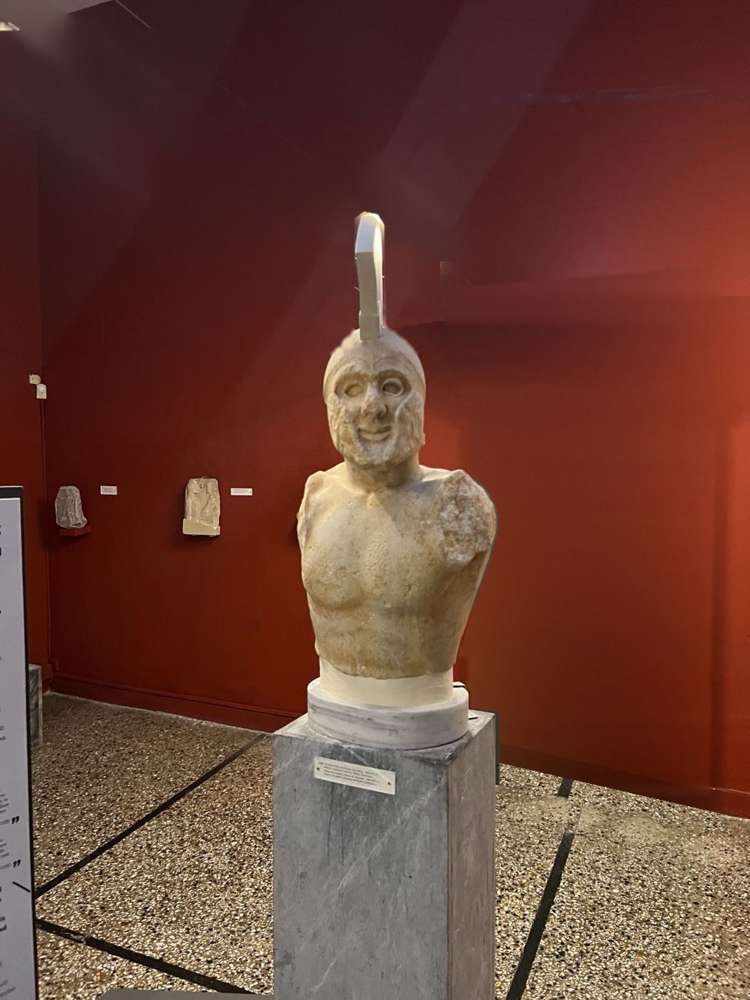
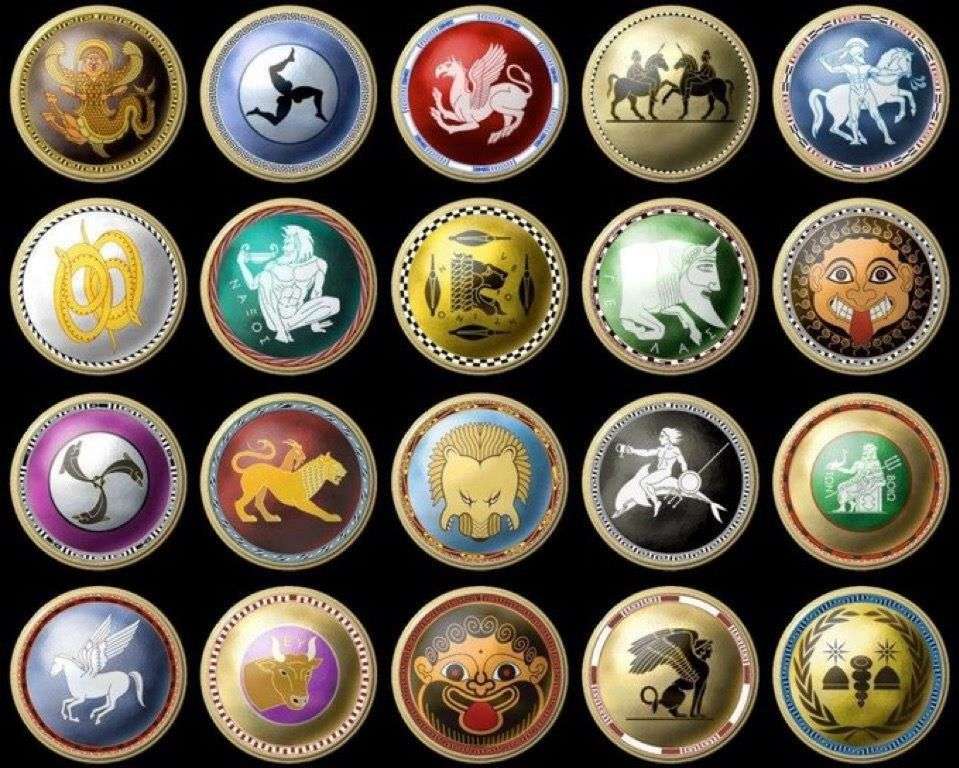
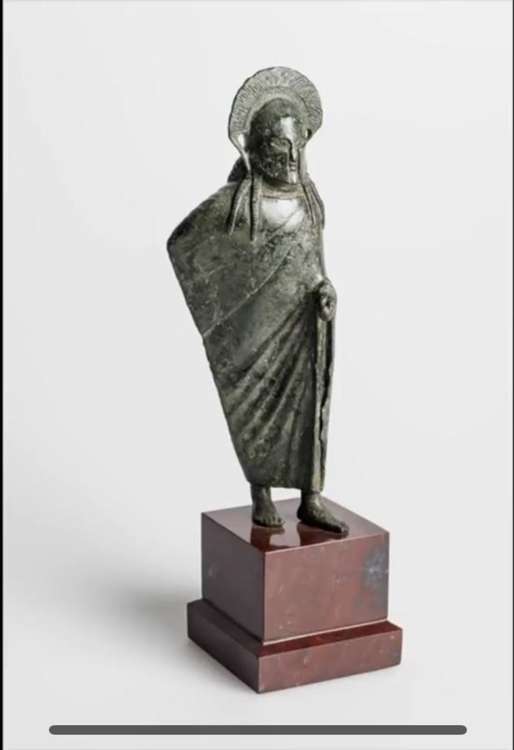
Shonagon, CC0, via Wikimedia Commons

Marie-Lan Nguyen, Public domain, via Wikimedia Commons

1st century artist in Pompeii, Public domain, via Wikimedia Commons

Vicenç Valcárcel Pérez, CC BY-SA 4.0, via Wikimedia Commons

Sources
Homer, Iliad 4, 5, 13, 15 and 21, and Odyssey 8; Hesiod, Theogony; Homeric Hymn 8; Aeschylus, Seven against Thebes; Euripides, Phoenician Women; Apollodorus, Library 1.7 and 3.14; Pausanias 1.8, 1.28, 3.14–22 and 8.44–48.
Quotations in public-domain translations (Evelyn-White 1914, Butler 1898/1900, Taylor 1792); other authors paraphrased.